Returns and Refunds at Immerse Creations Explained
You've opened the plain outer parcel, checked the order, and paused before touching the inner packaging. Perhaps the item no longer feels right. Perhaps you've spotted damage. Or perhaps you're worried that asking for a return will mean explaining something personal to a stranger.
That hesitation is common, but the rules are more practical than awkward. UK customers have two separate legal routes for online returns: one for changing your mind and another for faulty or misdescribed goods. Intimate products add a further issue, because a health or hygiene seal can affect whether a change-of-mind return remains available once it's broken.
This guide separates those routes, shows what to check before opening anything, and sets out the evidence and steps that make a return easier to process. If you're still deciding whether to open the parcel, start with the hygiene sections. If the product is faulty or arrived damaged, go straight to the fault and damage guidance.
Table of Contents
- When a Discreet Parcel Arrives and the Doubts Begin
- The Two UK Legal Tracks You Need to Know
- Why Hygiene Seals Change the Rules for Intimate Products
- How to Request a Return Step by Step
- Change of Mind, Faulty, or Damaged in Transit
- When Your Refund Actually Lands
- Five Assumptions Worth Challenging
- A Quick Checklist and What to Do If You Get Stuck
When a Discreet Parcel Arrives and the Doubts Begin
A plain-boxed parcel from Immerse Creations is sitting on the kitchen counter. You know what you ordered, but you're not sure whether you want to keep it. The packaging looks intact, and the safest move may be to stop before opening the protective seal.
You don't need to feel embarrassed about asking for help. A returns request should be handled like any other customer-service issue, with an order reference, a clear reason, and enough information to identify the problem. You shouldn't need to describe private details that have no bearing on whether the item is faulty, damaged, or eligible for cancellation.
The important distinction is why you want to return the item:
- Change of mind: You ordered online and no longer want the product, subject to the rules for sealed goods and other statutory conditions.
- Fault: The item doesn't work, isn't as described, or fails to meet the required standard.
- Transit damage: The parcel or product arrived damaged and needs to be documented promptly.
Discreet delivery can reduce exposure before the parcel reaches you, and Immerse Creations' discreet delivery guidance explains the privacy side of receiving an order. Returns need the same calm approach. Keep the packaging, avoid breaking a hygiene seal while you're deciding, and record what you've noticed.
The rest of this guide answers the practical questions customers usually have: which legal clock applies, what “sealed” means in practice, what evidence to gather, how to request a return, and what to do when a refund appears to be taking too long.
The Two UK Legal Tracks You Need to Know
One awkward moment causes a lot of returns trouble. You decide you may not want the item, but you are not sure whether to describe the problem as a cancellation or a fault. Get that choice right first, because UK law treats them as two separate routes.
Cancellation is for a change of mind
If you bought online and no longer want the product, you are usually dealing with cancellation rights for distance purchases. In general, you can cancel within 14 days after receiving the item, then you have another 14 days to send it back. You do not need to show that anything is wrong with the item. The point is that you bought it without seeing it in person.
That right is not unlimited. With intimate products, the key question is whether the goods were supplied sealed for health-protection or hygiene reasons and whether that seal has been broken. That is why it makes sense to pause, inspect the parcel carefully, and gather photos before opening anything that looks like a hygiene barrier. The Citizens Advice guidance on changing your mind about an online purchase explains the general cancellation process and timing.
If your cancellation is valid, the retailer will usually refund the product price and the original standard delivery charge. It can wait until the goods are returned, or until you show proof that you sent them back. It can also reduce the refund if your handling went further than what was needed to inspect the item.
Faults are covered by a different right
A fault claim is different from a change of mind. If the item is defective, misdescribed, damaged, or does not meet the standard the contract requires, your rights come under the Consumer Rights Act 2015. Within the first 30 days, you will generally have a short-term right to reject faulty goods and ask for a refund. After that, repair or replacement is usually the first remedy, with a possible final right to reject if those remedies do not fix the problem. The legal framework is set out in the Consumer Rights Act 2015.
For intimate products, this distinction matters. A retailer can rely on a hygiene exclusion to refuse a change-of-mind return after a seal is broken. It cannot use that exclusion to erase your statutory rights if the product is faulty.
For example, a Sex Machine with 5 Dildo Attachments includes several functional parts, such as adjustable rotation, automatic speeds, suction cups, and interchangeable attachments. If one of those functions fails, say so plainly and report the symptom as a fault. Do not file it as “change of mind” just because the product is intimate.
Practical rule: Choose the route that matches the real problem. If you no longer want the item, use cancellation. If it does not meet the contract, report a fault and keep evidence of what failed.
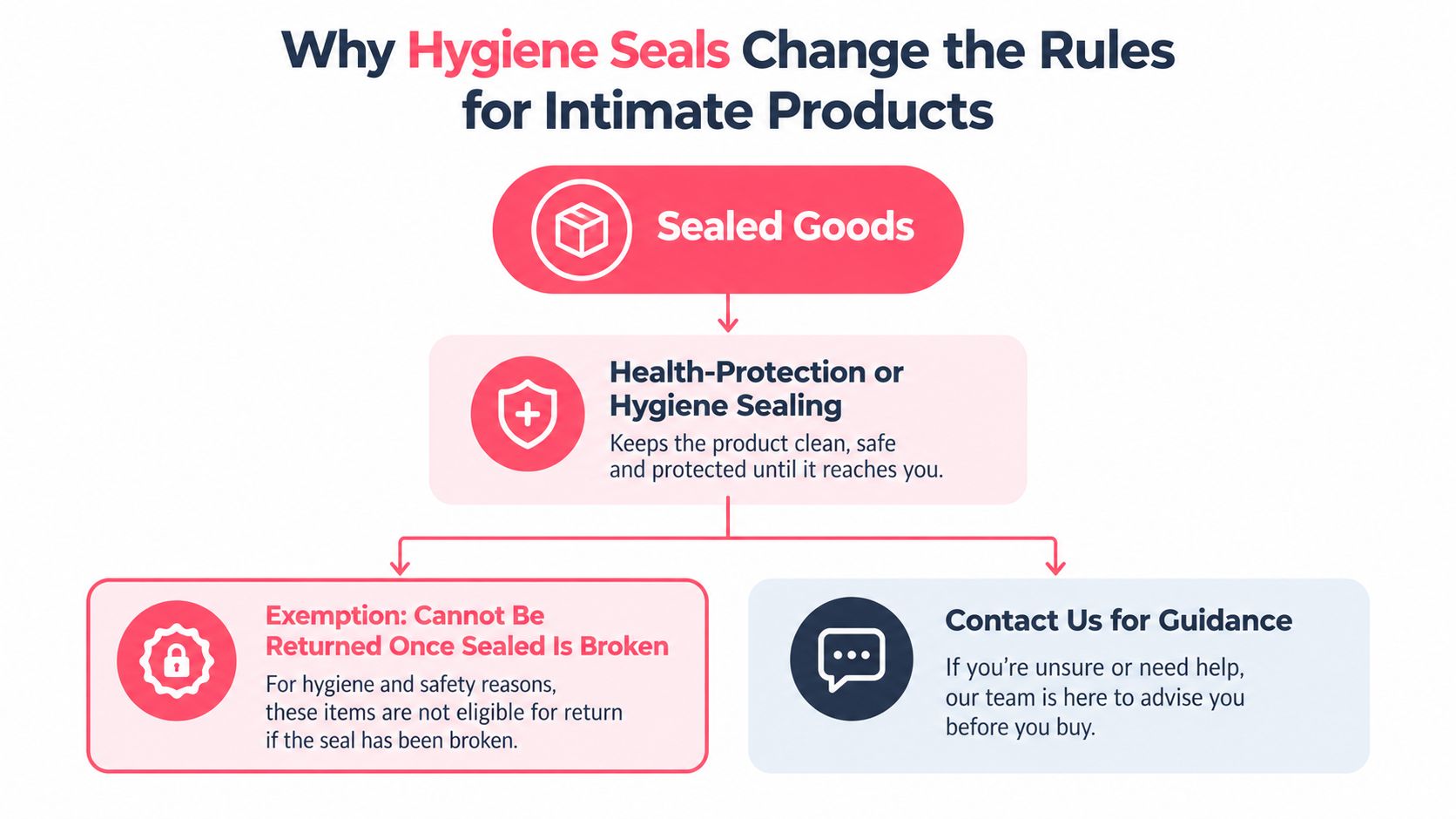
Why Hygiene Seals Change the Rules for Intimate Products
You open a plain parcel at the kitchen table, spot a sealed intimate product inside, and realise you are not sure whether to inspect it, test it, or leave everything untouched. This is the point where returns usually go wrong. For intimate products, the difference between opening a carton and breaking a hygiene seal can decide whether a change-of-mind return is still available.
The hygiene exception exists for a practical reason. Once a protective seal meant to preserve health or hygiene has been broken, a retailer may be unable to resell the item safely. That rule applies to the seal itself, not automatically to every layer of packaging. Opening outer packaging to inspect a parcel isn't automatically the same as breaking a protective hygiene seal. A delivery box, a product box, and a sealed wrapper or adhesive strip serve different purposes. Treat them as different things, and document them separately.
Check before you open
Pause before you break anything. Inspect the parcel first and photograph what matters while it is still in the condition it arrived in.
- The outer box: Record crushing, tears, moisture, punctures, or signs of rough handling.
- The internal packaging: Photograph labels, protective wrapping, and any intact seal.
- The product condition: If the item is visible without breaking a hygiene barrier, record marks, cracks, or missing parts.
- The order details: Keep the confirmation email and delivery date with the images.
Do not use the product "just to test it" if your issue is that you have changed your mind. Testing goes beyond basic inspection very quickly with intimate goods, and once a hygiene seal is broken, the retailer may refuse a cancellation return on that basis.
If you are checking for a possible fault, record the features and packaging first. For example, the Sex Machine with 5 Dildo Attachments is sold with multiple functional parts and settings. Those specifications help you describe a fault precisely, so record them before you contact support.
The exception is not a blanket refusal
Retailers still need to look at the actual condition of the item and packaging. An opened shipping carton, a dented product box, and a broken hygiene seal are separate facts. State exactly what happened, what you opened, and what remained sealed.
The same applies if the product is faulty, misdescribed, or damaged on arrival. Report the problem directly, even if some packaging was opened to identify it. Include the symptom, clear photos or video where useful, and the order reference. Support teams need enough evidence to separate a genuine fault from misuse. They do not need unnecessary intimate details.
How to Request a Return Step by Step
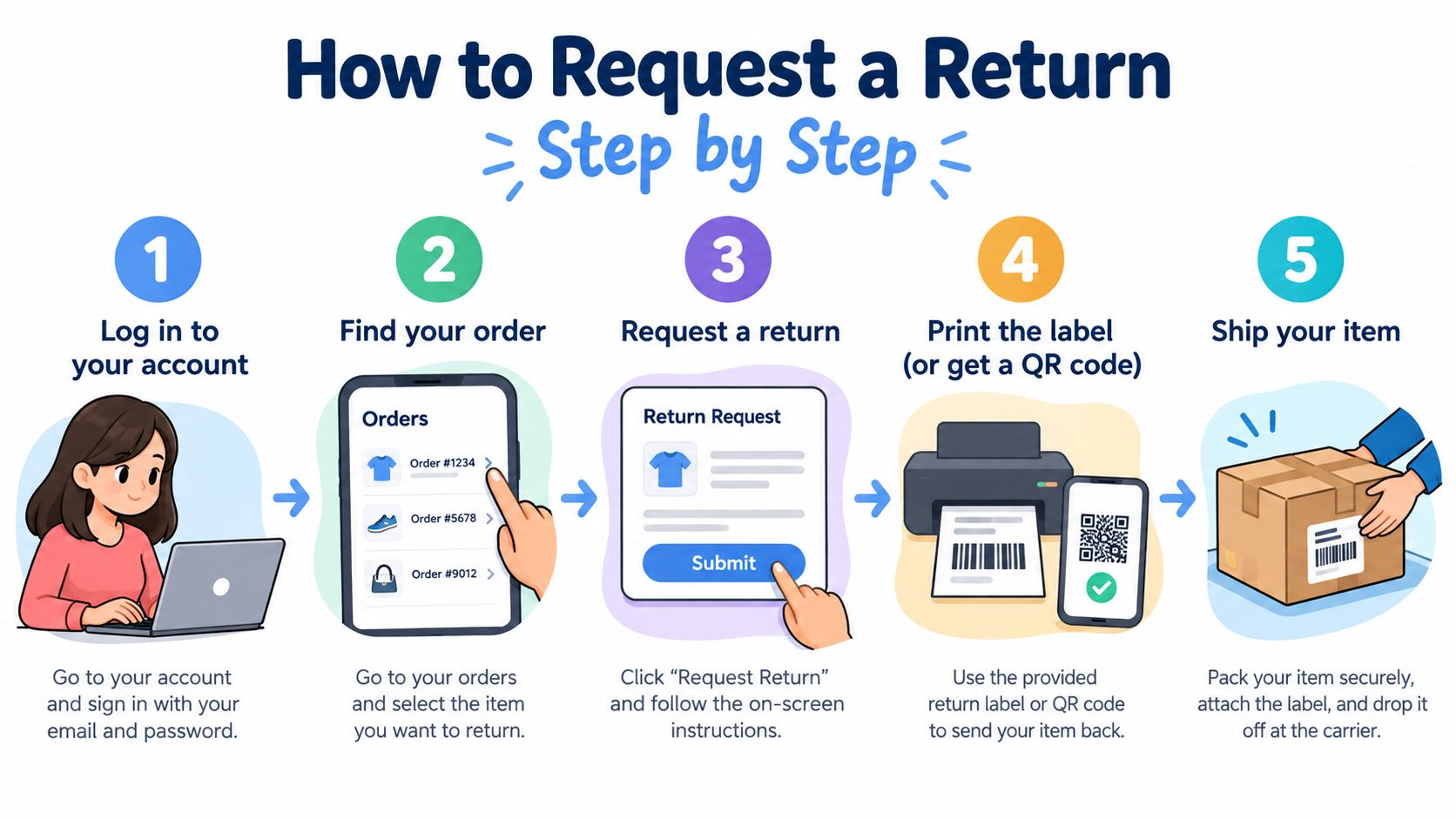
A good return request is factual, private, and easy to match to an order. You don't need to write an essay or disclose intimate details. Give the team the information needed to identify the purchase and classify the request correctly.
- Find the order confirmation. Locate the email showing the order reference, delivery date, and item. If you can't find it, search the email account used at checkout for the retailer name or order confirmation.
- Choose the correct reason. Select change of mind, suspected fault, or damage in transit. Don't select a fault route just because you're worried about the seal, and don't describe a mechanical failure as a change of mind.
- Write a neutral description. For a change of mind, state that you want to cancel the order and confirm whether the hygiene seal is intact. For a fault, describe what happens, when it happens, and which function or accessory is involved. For transit damage, describe the visible damage and attach photographs.
- Photograph before repacking. Take clear images of the outer parcel, inner packaging, seals, product condition, and any accessories. Keep the original files. Avoid including faces, rooms, or personal information if those details aren't relevant.
- Repack discreetly. Reuse the plain outer packaging where possible. Remove old courier labels or cover them completely, and make sure the new label is readable. Include the item and relevant accessories, but don't add handwritten notes containing unnecessary personal information.
- Use a tracked service. Obtain a drop-off receipt and keep the tracking number. A carrier scan can establish when you handed the parcel over, while delivery confirmation helps resolve disputes about receipt.
- Keep the return reference. Save the confirmation from the support team, the tracking record, photographs, and your written request in one folder. If the team asks for more information, reply in the same thread so the history stays together.
If you need to contact the retailer, use the Immerse Creations contact page. Keep the message concise. Order reference, reason, seal condition, delivery date, and evidence are usually more useful than a detailed explanation of why the purchase feels awkward.
Keep for yourself: the cancellation timestamp, tracking receipt, photographs, return reference, and every message exchanged.
Change of Mind, Faulty, or Damaged in Transit
Choosing the wrong route can slow down an otherwise legitimate request. Use the comparison below before submitting the form.
Return Reasons at a Glance
| Reason | Eligibility | Evidence Needed | Return Postage | Refund Outcome |
|---|---|---|---|---|
| Change of mind | You cancel an online purchase within the applicable cancellation period, subject to the condition of the goods and any lawful hygiene exception | Order reference, cancellation date, seal and packaging condition, return tracking | Follow the instructions provided for the cancellation route and retain proof of posting | Product price and original standard delivery are generally reimbursed, subject to lawful deductions and the return trigger |
| Faulty | The product is faulty, damaged, unusable, misdescribed, or not as advertised | Order reference, symptom description, photographs or video where useful, charging and accessory details, and relevant handling information | The retailer should handle the claim consistently with the applicable statutory remedy | A full refund may be available where faulty goods are rejected within the short-term period; repair or replacement may apply later |
| Damaged in transit | The parcel or product arrived damaged before normal use | Order reference, photographs of outer and inner packaging, delivery date, and description of the damage | Follow the retailer's damage-claim instructions and keep the carrier record | The retailer assesses the evidence and applies the appropriate remedy for damage or non-conformity |
For powered devices, explain the symptom rather than guessing at its cause. State whether the device charges, whether the issue affects every setting, whether an attachment is involved, and whether the instructions were followed. A short video can show a failure more clearly than several paragraphs.
For a parcel crushed at delivery, photograph the box before discarding anything. Don't clean, repair, or dispose of damaged packaging until the retailer has had a chance to assess the claim.
The key point is simple: a hygiene rule applies to a change-of-mind return, not as a substitute for dealing with a genuine defect. If the item fails after delivery, report the failure plainly and let the retailer assess the statutory route.
When Your Refund Actually Lands
You hand over a discreet return, tracking shows movement, and then nothing appears on your card. That gap is where customers start chasing the wrong step.
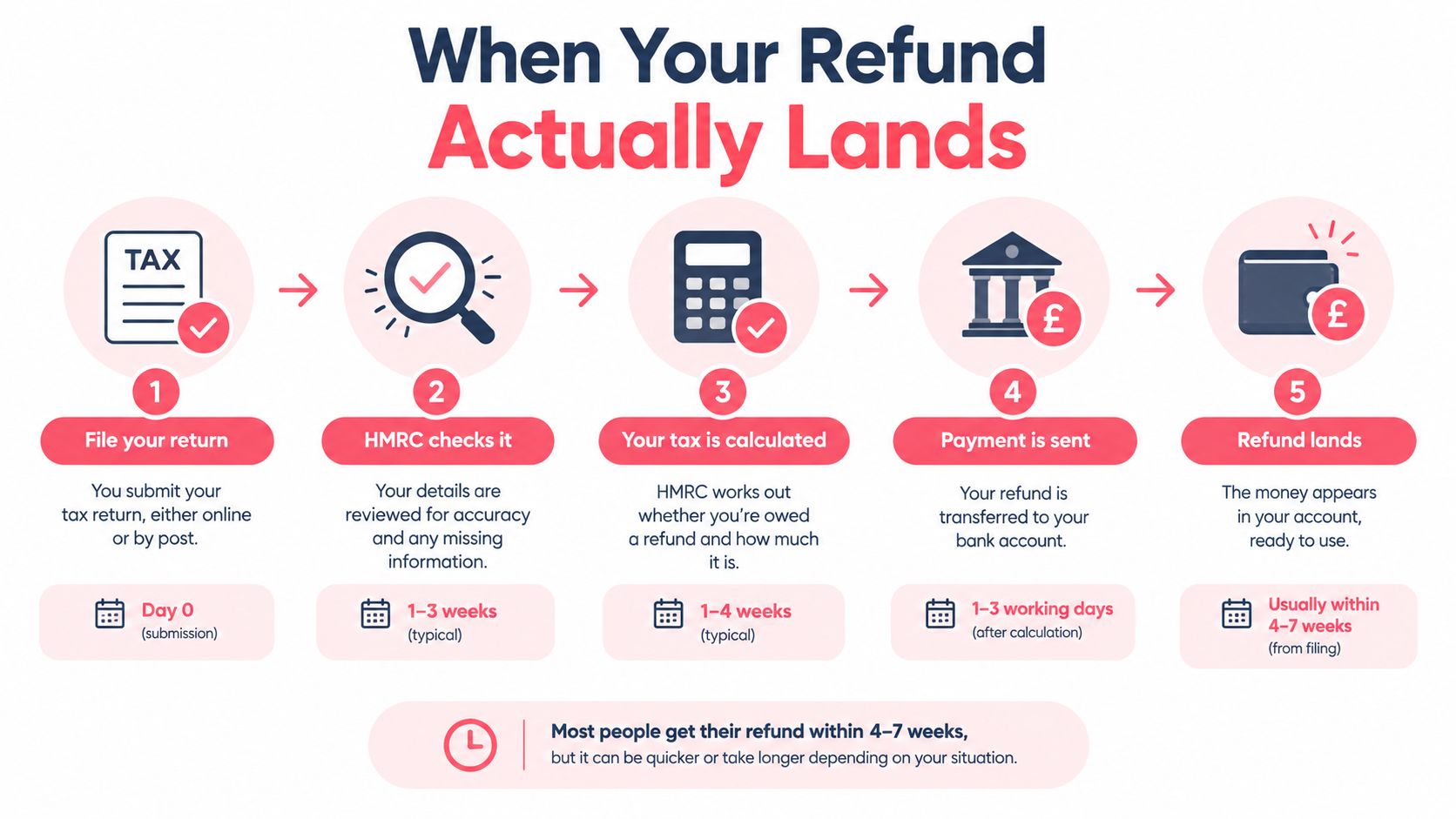
A refund usually passes through five separate hands. The courier records acceptance. The retailer receives and checks the parcel against your return reference. The retailer then authorises the refund through the original payment route. After that, the payment provider and your bank post the credit to your account. A delay at any one stage can make it look as if the whole return has stalled.
The practical sequence
- Carrier acceptance: The parcel gets a drop-off or collection scan. Keep the receipt and tracking number.
- Transport and delivery: Tracking may show movement, delay, or delivery to the retailer.
- Retailer receipt: The warehouse matches the parcel to your return reference and checks its condition.
- Refund authorisation: The retailer confirms the amount due and submits the refund through the original payment method.
- Card or bank processing: The payment provider and bank apply the credit to your account.
For statutory refunds, the trader should not drag the process out. For distance cancellations, the retailer can usually wait until the goods arrive back, or until you show evidence that you sent them. That distinction matters. If you are returning an intimate product, your proof of posting and tracking are often the cleanest way to avoid an argument about timing while the parcel is still in transit.
Speed still matters even where the legal position is clear. YouGov's research on free returns and shopper expectations found that 53% of online shoppers said they wouldn't shop again with a retailer that refunded slowly, and 67% said they'd likely spend the refund with the same retailer if it arrived within two to three days of the return. The UK returns benchmark from Retail Economics and ZigZag reported an average UK refund time of 7.3 days, while only 9% of UK retailers refunded within two days.
If tracking shows delivered and the refund is still pending, send the retailer the tracking proof and your return reference in one message. Do not file a second return request unless support tells you to. If the retailer says the refund has already been issued, check the original card, wallet, or payment account first. Posting delays can sit with the payment chain, not the support team.
A partial refund needs a written explanation. Ask which item, accessory, delivery charge, or handling issue caused the deduction, and ask for the basis for it in plain terms. If you need a quick check before contacting support again, the Immerse Creations returns and processing FAQ covers common follow-up questions.
Five Assumptions Worth Challenging
“All sex toys are automatically non-returnable.” That's too broad. The relevant question is whether the specific item is sealed for health-protection or hygiene reasons and whether that seal has been broken. A retailer should assess the product and packaging individually, while faulty or misdescribed goods remain subject to their own statutory remedies.
“The 14-day rule only applies if something is wrong.” It doesn't. The distance-selling cancellation right is designed for a change of mind. A customer can cancel without claiming a defect, but the goods still need to satisfy the applicable return conditions, including any lawful hygiene exception.
“Store credit is the only refund option.” Where the consumer paid money, the Consumer Rights Act framework generally requires a monetary refund rather than an imposed voucher or store credit when a statutory refund is due. A voluntary exchange or credit offer can be different, but it shouldn't replace a legal monetary remedy.
“Returning the parcel means explaining the product at a counter.” Usually, the carrier needs a parcel and a label, not a personal explanation. Use discreet outer packaging, remove old labels, and retain the receipt. The retailer's support team can handle the reason through the online request.
“The 30-day fault period resets with every order.” It doesn't. The short-term right to reject relates to the relevant purchase and the timing after delivery. If a fault appears later, repair or replacement may become the primary remedy, with a possible final right to reject if those remedies fail.
“A slow refund automatically means the retailer is withholding money.” Not necessarily. A parcel may be waiting for a carrier scan, warehouse receipt, inspection, refund authorisation, or payment-provider processing. Ask for the current stage, provide tracking evidence, and escalate when the applicable deadline has passed rather than assuming the cause.
The most useful habit is to keep the categories separate. Change of mind, fault, and transit damage are not interchangeable labels, and each one calls for different evidence.
A Quick Checklist and What to Do If You Get Stuck
Save this checklist before opening or returning the parcel:
- Seal: Check whether a protective hygiene seal is intact.
- Date: Record the delivery date and cancellation date.
- Order: Find the order confirmation and reference.
- Reason: Select change of mind, fault, or transit damage accurately.
- Evidence: Photograph packaging, seals, damage, and relevant product symptoms.
- Privacy: Remove old labels and avoid unnecessary personal details.
- Tracking: Use a tracked service and keep the carrier receipt.
- Follow-up: Save the return reference and monitor the refund stage.
If the retailer doesn't respond, contact support again in writing and attach the original request, tracking evidence, and any promised timeframe. Keep your message focused on the missing action, such as confirmation of receipt, a refund decision, or an explanation for a deduction.
If the legal deadline passes without a proper response, contact your card provider about its dispute or chargeback process. You can also seek guidance from Citizens Advice consumer support and ask about appropriate alternative dispute resolution. Chargeback isn't a replacement for your statutory rights, so keep all evidence and explain the timeline accurately.
Immerse Creations sells intimate products for adults through a discreet UK online service, with product specifications, order support, and returns guidance available before you buy. If you're comparing options or need a private way to shop, visit Immerse Creations, check the seal and returns information before opening a parcel, and contact support as soon as a fault or delivery problem appears.