Used Adult Toys UK: Safety, Hygiene and Legal Risks
Scrolling through a second-hand marketplace at 11pm, you find a rechargeable vibrator at a tempting price. The seller says it has been “barely used”. Is a thorough wash enough, or are you buying someone else's infection risk, privacy problem and battery headache?
The honest answer is neither “used adult toys are always dangerous” nor “soap makes everything fine”. Risk depends on the material, the toy's condition, its history, how it was used, whether it contains electronics, and whether you can clean every part properly. Some items should never be passed on. Others may be reusable when the evidence is clear and sensible precautions are followed.
Table of Contents
- Understanding the Basics of Used Adult Toys
- Infection Risks and Fomite Transmission
- Cleaning and Sterilisation Guidance
- When Buying or Passing On Used Toys Makes Sense
- Legal, Ethical and Retail Context in the UK
- Sustainability, Resale and Responsible Disposal
Understanding the Basics of Used Adult Toys
A used adult toy might mean a single-owner item sold after a short trial, a toy shared between partners, a casual swap between friends, or a product bought from a marketplace with no reliable history. Those situations aren't equivalent. The phrase “second-hand” tells you very little about the actual hygiene risk.
The first question is simple: has the toy touched another person's body? A sealed return that was never used presents a different problem from an insertable toy with an unknown owner. A product used only externally isn't automatically safe either, especially if it has textured surfaces, seams, porous material or hidden openings.
UK survey evidence shows why this question matters. A 2020 UK self-pleasure report found that more than half of adults aged 18 to 54 had used a sex toy at some point, with nearly two-thirds of women and LGBTQIA+ respondents reporting previous use. The report also found that about three-quarters of UK users used toys less than once per week, so prior ownership doesn't necessarily tell you how heavily an item was used.
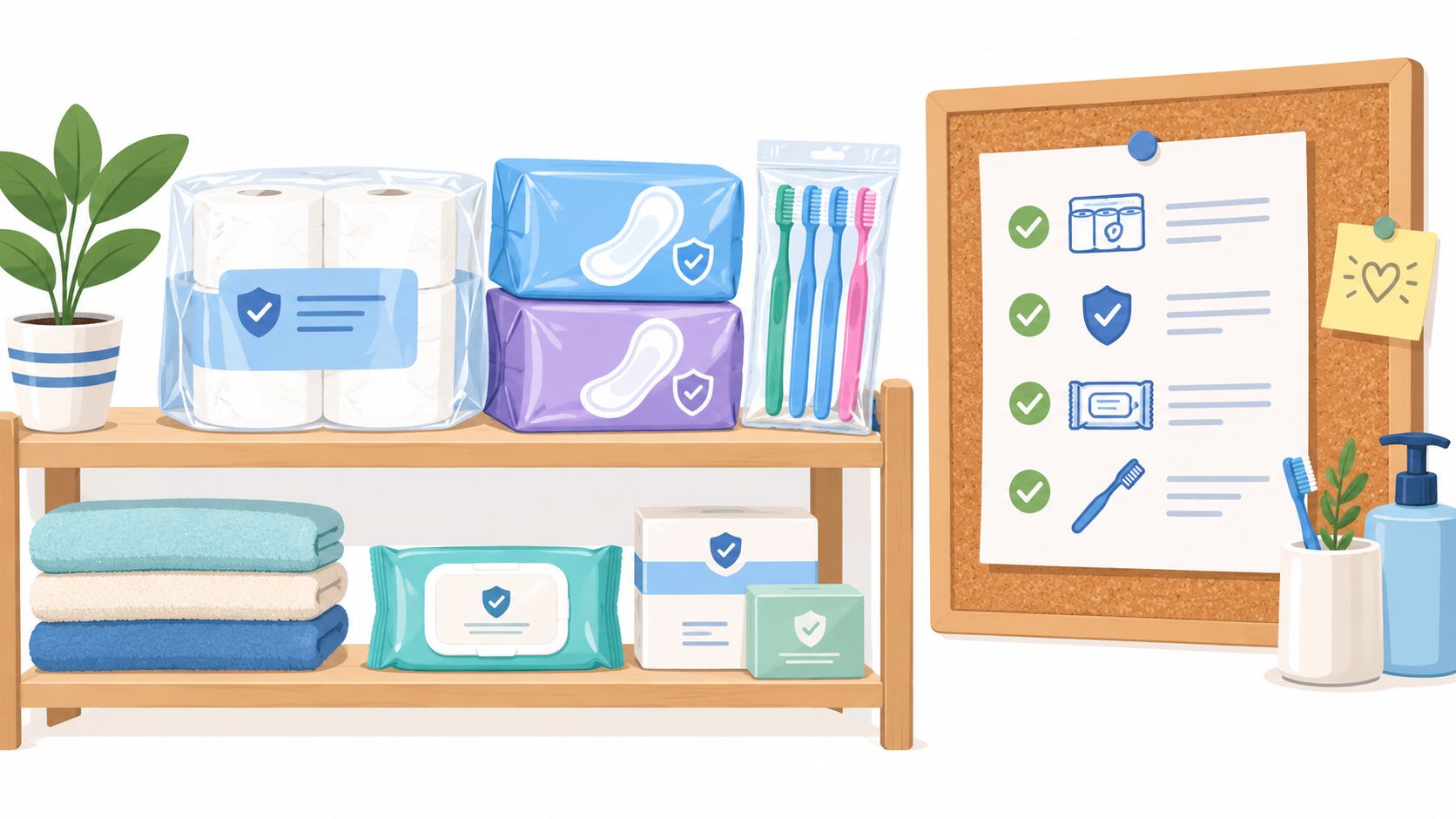
Ask the seller the questions that matter
Don't begin with “Can I get it cheaper?” Begin with:
- What material is it? You need a clear answer, not “soft rubber” or “skin-friendly”.
- Was it inserted? Anal and vaginal use creates different cleaning concerns from external use.
- Was it shared? A single-owner toy is easier to assess than one used by several people.
- Is it waterproof? The manufacturer's instructions matter more than a seller's guess.
- Does it have cracks, tackiness, peeling or odour? Any of these can be a reason to walk away.
- Does it connect to an app? A connected device creates privacy and account-reset questions.
- Is the charger included and safe? Missing or incompatible charging equipment can turn a bargain into a hazard.
A reputable retailer's material and care information can help you compare products before buying. The guide to choosing safe intimate products is useful for understanding why a clearly identified, non-porous material is preferable to an unknown soft plastic.
Practical rule: If the seller can't answer basic questions about material, use and condition, treat the toy as unsuitable for intimate reuse.
Cost pressure is real, but a cheap toy isn't cheap if it causes irritation, an infection, a privacy breach or a battery disposal problem. New, clearly specified products usually remove the hardest unknowns. Used items need evidence, not optimism.
Infection Risks and Fomite Transmission
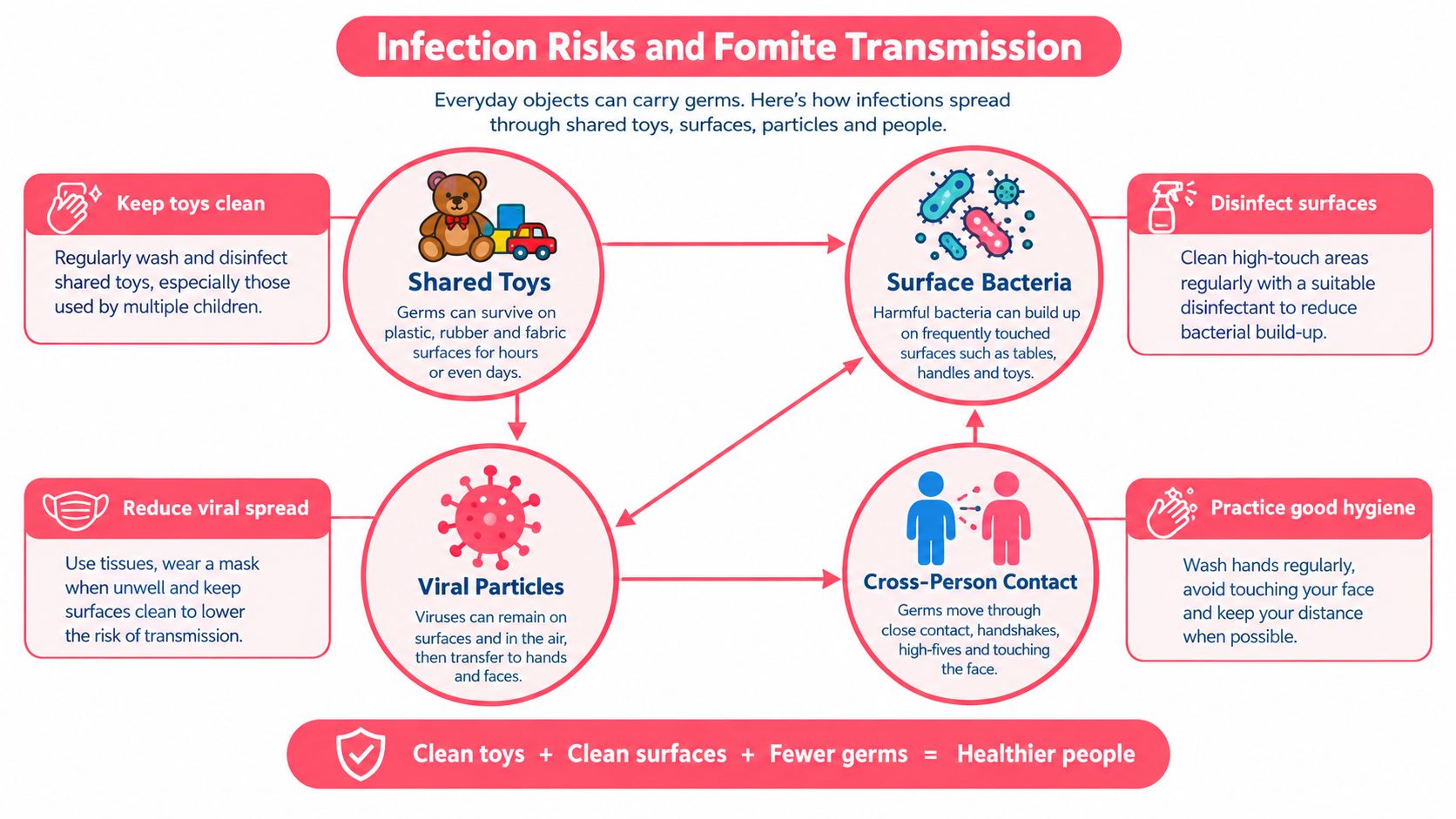
A fomite is an object that can carry infectious material from one person to another. A used adult toy can become one when biological residue remains on its surface and another person uses it without effective cleaning or a barrier.
UK sexual-health guidance states that shared toys can transmit infections including chlamydia, syphilis and herpes. Where blood is present, the relevant risks also include hepatitis B, hepatitis C and HIV. This doesn't mean every second-hand toy carries an infection. It means the object can form part of a transmission route, particularly when the previous user's health is unknown and the toy has been used internally.
Why surface design changes the risk
A smooth, intact, non-porous surface is easier to clean than a porous or damaged one. Seams, raised textures, charging joins and narrow grooves can hold residue where a quick rinse won't reach. Cracks and rough patches add both a hygiene problem and a tissue-injury problem.
Visible residue is an obvious warning, but invisible contamination is the more important issue. You can't assess a former user's infection status by looking at the toy, and you can't assume that a seller's confidence equals disinfection. Cleaning can reduce contamination. It can't turn an unidentified, porous or damaged object into a reliably safe one.
Cuts and sores make the situation worse. Damaged genital or anal tissue gives pathogens a more direct route into the body, while blood increases concern around blood-borne infections. Don't use a penetrative used toy over cuts, sores or irritated skin.
The anal-to-vaginal rule
Never move the same uncovered toy from the anus to the vagina. Enteric bacteria can transfer from the rectal area and cause infection. Use a fresh condom before switching areas, or clean the toy thoroughly according to its material and manufacturer's instructions before any change in use.
A condom is a useful barrier, not a magic reset button. It must cover the parts that contact the body, stay intact and be replaced for every user. UK guidance recommends fitting a new condom for every user and replacing it when switching between vaginal, anal or oral contact. This matters most with textured, seamed, porous or unknown materials.
If a shared toy has been used without a barrier, ask whether it can be cleaned to a reliable standard. With an unknown material or inaccessible internal mechanism, the answer is often no. Don't gamble because the item looks clean.
For a product designed for anal use, such as the Anal Prostate Massager with Penis Ring for Men, textured lines, a curved shaft, a cock ring and moving parts make the cleaning instructions especially important. Those features may create more surfaces and joins to inspect than a basic smooth toy.
Cleaning and Sterilisation Guidance
Cleaning removes residue. It doesn't automatically sterilise a used adult toy, and household washing isn't a guarantee that every material or internal mechanism is safe for reuse. The correct method depends on whether the product can be immersed, whether it contains batteries, and whether the surface is intact.
Start with the manufacturer's instructions. If the toy is designed for immersion, UK sexual-health guidance recommends cleaning it after every use with warm water and mild, unscented soap. Don't use harsh household disinfectants unless the manufacturer specifically permits them. They can damage coatings and leave irritants on a surface that touches sensitive tissue.
Match the method to the construction
For a waterproof toy:
- Remove detachable parts if the instructions allow it.
- Wash every external surface with warm water and mild, unscented soap.
- Work around seams, buttons and textured sections rather than rinsing quickly.
- Rinse away all soap so residue doesn't irritate skin.
- Dry completely with lint-free paper or a clean cloth before storage.
For a non-waterproof or battery-operated toy, remove the batteries first and wipe it with a clean, soapy cloth. Keep water away from charging ports, switches and joins. Never assume that a USB charger means the device is waterproof.
Drying deserves more attention than it gets. Moisture left around seams, ports and buttons can support microbial persistence, while ordinary fluffy towels may leave fibres behind. Let the toy air-dry where appropriate, then use lint-free paper or cloth to remove remaining moisture before putting it away.
This video provides a visual reference for cleaning techniques and the difference between toy constructions.
Know when cleaning has failed
Inspect the toy under good light. Discard it if you find:
- Cracks or tears, which can trap residue and injure tissue.
- Rough patches, which can cause tiny abrasions.
- Peeling or degraded coating, which may expose an unknown underlying material.
- Persistent tackiness or odour, especially after washing.
- Unidentified porous material, because you can't reliably clean contamination from its internal structure.
- Inaccessible cavities, where moisture and residue can remain.
Don't boil or use heat unless the manufacturer says the toy can tolerate it. Heat may damage motors, batteries, adhesives or coatings. UV devices and toy cleaners also shouldn't be treated as universal sterilisation systems. Their effectiveness depends on the device, exposure, surface and whether every area receives the required treatment.
Use a fresh condom for shared use, especially with insertable toys. Replace it between users and whenever switching between oral, vaginal and anal contact. Cleaning and barriers work together, but neither rescues an item that is porous, damaged or impossible to inspect.
When Buying or Passing On Used Toys Makes Sense
The decision should be based on material, history, condition and construction, not on the seller's description alone. Use this table as a hard-nosed filter.
| Scenario | Risk Level | Recommended Action |
|---|---|---|
| Single-owner toy made from clearly identified, non-porous material, intact and easy to clean | Lower, but not zero | Reuse may be reasonable after a full inspection and thorough cleaning. Use a condom if another person will use it. |
| Unknown-history jelly, rubber or TPE toy | High | Don't buy or pass it on for intimate reuse. Unknown or porous materials can retain contamination and may not be cleanable. |
| Toy with cracks, tears, rough areas, peeling or permanent tackiness | Unacceptable | Dispose of it. Cleaning won't repair physical damage or remove every trapped contaminant. |
| Shared insertable toy with no condom history | High | Treat it as unsuitable unless the material and construction allow reliable cleaning and the toy passes a careful inspection. |
| Waterproof toy with a smooth, intact, clearly identified surface | Moderate | Follow the manufacturer's cleaning instructions. Inspect seams and controls, then dry completely. |
| Battery-operated or app-connected toy with unclear history | Moderate to high | Assess hygiene, charging safety, account removal and data reset before considering reuse. |
| Toy with visible residue, blood or unknown bodily fluid | Unacceptable | Don't use it. Request a refund where appropriate and dispose of it safely if it can't be returned. |
Condoms reduce contact, not every risk
A condom can create a useful barrier over a smooth insertable toy. It won't cover every textured area or external component, and it can split if the surface is rough or the fit is poor. It also doesn't solve a contaminated handle, ring, remote or attachment that touches skin.
For anal toys, use a condom that stays secure and make sure the toy has a suitable flared base. Never insert an object without a retrieval feature designed for that purpose. Stop if the toy causes pain, bleeding or unusual irritation.
If you're passing a toy on, be honest about its history. Don't describe it as “sanitised” unless you can explain what was done and the manufacturer's instructions support that method. Better still, don't pass on a used porous or damaged toy at all.
Retail returns are a separate issue from hygiene. A retailer may have restrictions on opened intimate products, while a marketplace sale may give buyers limited protection. Read the seller's returns and refunds information before purchasing, but don't rely on a return policy to justify taking an avoidable health risk.
A new, clearly specified toy is the sensible choice when you can't establish material, condition and provenance. Saving money is not a strong reason to accept an unknown object for internal use.
Legal, Ethical and Retail Context in the UK
UK buyers often focus on whether a toy is “body-safe”, but that phrase means little without material information and care instructions. Look for a manufacturer that identifies the material clearly, explains cleaning, provides safe-use guidance and gives you a route to ask questions. Medical-grade silicone can be a useful indicator when the product specification is genuine and specific, rather than a vague marketing label.
Material transparency matters because porous and unidentified surfaces are harder to clean reliably. A retailer that publishes construction details and compatibility information gives you more control than a marketplace listing that merely says “soft” or “realistic”.
Retail safeguards matter
Buying new from an established retailer can reduce several risks at once:
- Clear product specifications help you assess material, size and construction.
- Care instructions tell you whether immersion is permitted.
- Age controls help restrict adult products to people aged 18 and over.
- Discreet packaging and billing reduce exposure during delivery and payment.
- Privacy policies explain how personal information and account data are handled.
- Returns information sets expectations before you open or use the product.
These safeguards don't replace common sense. A new toy still needs washing before first use, appropriate lubricant and regular inspection. But the buyer starts with a known product rather than an object with an uncertain history.
Privacy becomes more complicated with connected devices. Before buying or accepting an app-enabled toy, ask whether the previous owner can still access it, whether the device stores usage information, and whether you can perform a complete factory reset. Don't pair a second-hand device with your phone until you understand its account and data settings.
Consent also applies to resale. The previous owner may have used the device with a partner, shared it, or connected it to an account containing personal information. Passing on a toy without removing identifiers, account links or saved data can expose somebody's private life.
For larger equipment, construction and attachments add another layer of assessment. The Sex Machine with 5 Dildo Attachments includes adjustable rotation, four speeds, suction cups and interchangeable attachments. Any used version would need separate inspection of the machine, connectors, suction surfaces and every attachment, rather than one quick wipe of the main body.
The ethical standard is straightforward: don't transfer a hygiene problem, a privacy problem or an unsafe electrical product to somebody else. If a toy can't be cleaned, reset and described truthfully, it shouldn't be resold as ready for intimate use.
Sustainability, Resale and Responsible Disposal
Reselling can extend a product's life, but sustainability doesn't automatically mean second-hand circulation. Infection control, privacy and battery safety may outweigh the environmental benefit of keeping an intimate product in use.
UK electrical-waste data shows the scale of the wider problem. In Q1 2025, small mixed electrical collections fell by 2% year on year, while equipment placed on the UK market increased by more than 46,600 tonnes compared with Q1 2024. The proposed 2025 household WEEE target was 512,209 tonnes, including 37,823 tonnes for small household appliances, according to UK WEEE compliance data. These figures don't isolate sex toys, but rechargeable vibrators and motorised thrusting devices are relevant small electrical appliances.
Before reselling an app-connected toy, remove personal identifiers, disconnect accounts and follow the manufacturer's reset instructions. For rechargeable devices, follow battery guidance and use an authorised WEEE collection point or retailer take-back route instead of putting the device in general household waste.
Don't place damaged lithium-ion batteries into ordinary bins. Keep them away from heat and follow local disposal instructions. Non-electronic accessories may have different disposal routes, but a porous or damaged intimate component should not be passed to another person just to avoid throwing it away.
Choose reuse only when the toy is cleanable, intact, resettable and accurately describable. Otherwise, responsible disposal is the safer and more ethical option.
Immerse Creations offers new adult toys, prostate massagers, vibrators, sex machines and intimate accessories with product specifications, cleaning guidance and discreet UK fulfilment. If you're replacing an uncertain second-hand item, visit Immerse Creations to compare clearly described products and choose a cleaner starting point.