Gag Sex Toy Guide Types Safety and How to Choose
You're curious about trying a gag sex toy, but the product pages seem to focus on appearance rather than the questions that matter in real use. Will you be able to breathe comfortably? How will you communicate if speaking is restricted? Is the material suitable for repeated mouth contact, and will the packaging protect your privacy?
A gag can be part of consensual power play, sensory exploration, roleplay or a fantasy built around surrender and control. It shouldn't be treated as a prop that removes someone's ability to stop. The safest choice combines a suitable design with clear consent, a reliable non-verbal signal, an attentive partner and a product whose materials are easy to verify.
UK buyers also have useful market context. PwC estimates that at least 25% of UK adults use sexual-wellness devices, although official UK retail data doesn't isolate gag toys as a separate category (PwC's sexual wellness devices market report). That means shoppers usually need to assess gag products through broader questions about material safety, cleaning, fit and discreet delivery rather than relying on a dedicated official category standard.
Table of Contents
- Introduction to Gag Sex Toys and What They Do
- Understanding Gag Types and How They Work
- Materials Body Safety and What to Avoid
- Safe Use Consent and Communication Essentials
- How to Choose the Right Gag for Fit and Comfort
- Cleaning Storage and Ongoing Care
- UK Buying Tips and Your Next Confident Step
Introduction to Gag Sex Toys and What They Do
A gag is designed to restrict or alter speech by placing a component in or over the mouth. The experience can range from gentle muffling to keeping the mouth open, depending on the design, fit and the wearer's anatomy. The visual style may attract attention, but the practical effect comes from jaw position, mouth coverage, airflow, saliva management and strap pressure.
For a first-time buyer, the simplest comparison is a pair of shoes. A dramatic-looking shoe can still be the wrong size, and a product that looks exciting may create pressure points or an uncomfortable jaw position. A suitable gag should match the wearer's comfort, the intended level of restriction and the communication system agreed before play begins.
A gag should change how someone communicates, not remove their ability to communicate.
Consent needs to be specific and ongoing. Agree what the gag is for, what activities are off limits, how long it may be worn, and what happens if the wearer becomes uncomfortable. Because speech may be muffled or blocked, a hand signal, tap-out or dropped object should be established before the gag is fitted.
The UK market offers plenty of discreet online options, but product descriptions vary greatly. Look for a named material, clear dimensions, adjustable straps and cleaning instructions. Avoid treating terms such as “body-safe” as enough evidence by themselves. The specification should tell you what the mouth-contact component is made from.
This guide follows a practical path from design to care. You'll learn how the main gag types differ, why non-porous materials are preferable, how to plan breathing and communication checks, and how to assess fit before committing to a purchase. You'll also get a UK-focused buying checklist covering privacy, delivery and returns.
Understanding Gag Types and How They Work
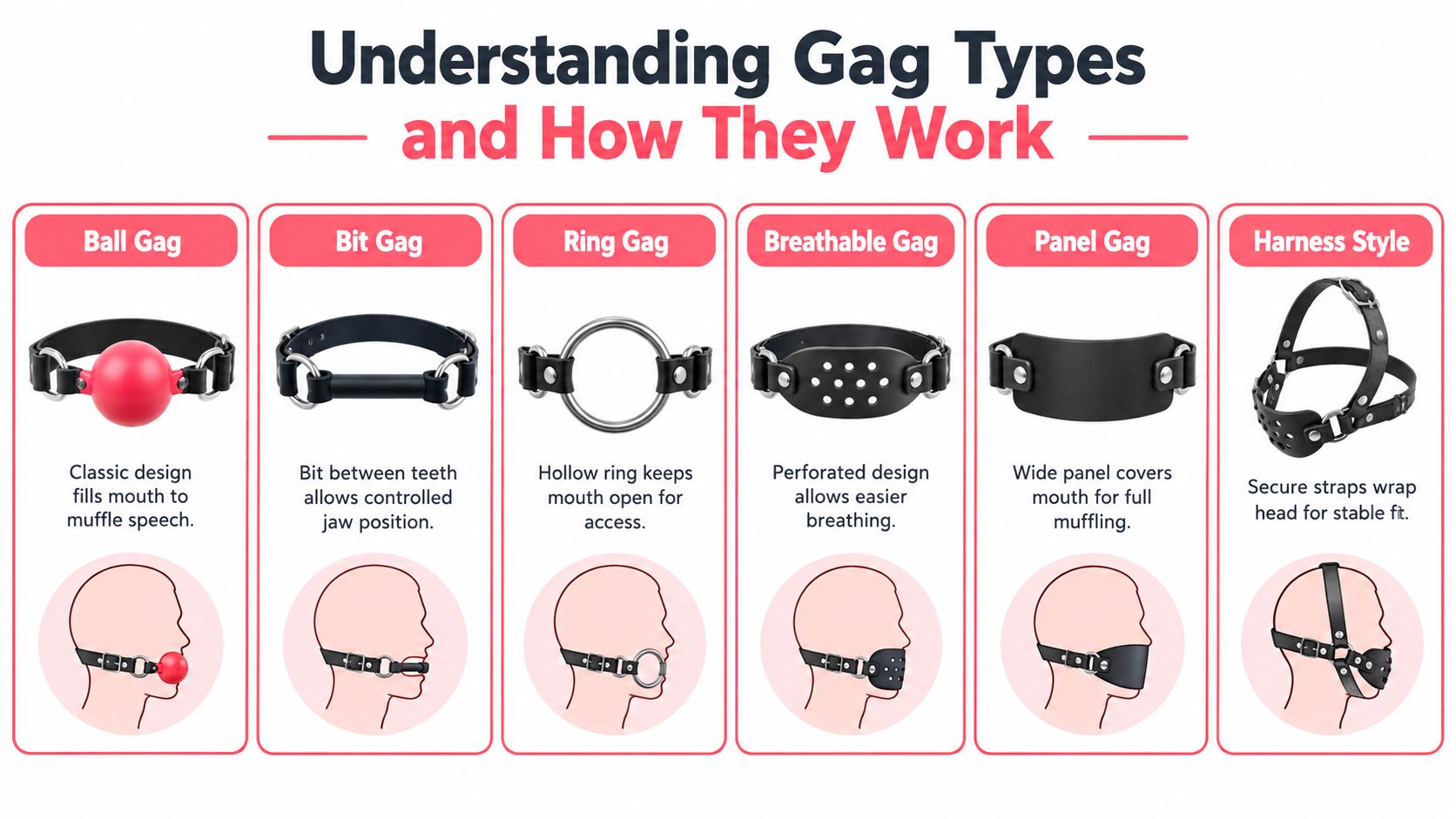
Start with the mouth component. A gag might fill part of the mouth, hold the jaw in a particular position, keep the mouth open with a ring, or cover the lips from the outside. Each design creates a different balance between speech restriction, airflow, drooling, visual impact and ease of cleaning.
The main designs
Ball gags use a rounded insert held by straps. The ball muffles speech and can encourage drooling, while the wearer's jaw remains around the shape rather than closing normally. A smaller, well-fitted design may feel less demanding than a large ball, but size alone doesn't determine comfort. The wearer's mouth, jaw mobility and breathing pattern all matter.
Bit gags resemble an equestrian bit, with a horizontal bar resting between the teeth or across the mouth. They can provide a controlled jaw position without filling the mouth in the same way as a ball. Teeth and jaw comfort deserve close attention, particularly if the wearer clenches under pressure.
Ring gags use a hollow opening to keep the mouth open. The ring can provide more access to the mouth than a closed ball, but that doesn't automatically make it easier to breathe. The surrounding shape, strap tension, saliva and the wearer's position still affect the experience.
Breathable gags include openings or perforations intended to allow easier airflow. These features may reduce the sense of enclosure, but they don't replace active monitoring. A hole can become obstructed by saliva, fabric or body position, so the partner should keep checking the wearer rather than assuming the design is risk-free.
Panel gags place a flatter, wider surface over the mouth. They tend to focus on external coverage and muffling rather than inserting a rounded object between the teeth. Because they can press across the lips and cheeks, strap adjustment and padding are important.
Harness-style gags describe the fastening system rather than one single mouth shape. Multiple straps wrap around the head to stabilise the gag, which can suit people who dislike a loose fit. More straps also mean more areas to inspect for pressure, hair pulling or awkward buckles.
A useful mental map is: closed insert equals stronger speech muffling, open ring equals more mouth access, perforation equals a design feature that may support airflow, and panel coverage equals external restriction. None of those labels can tell you whether a particular product is comfortable. Fit and communication planning remain decisive.
Materials Body Safety and What to Avoid
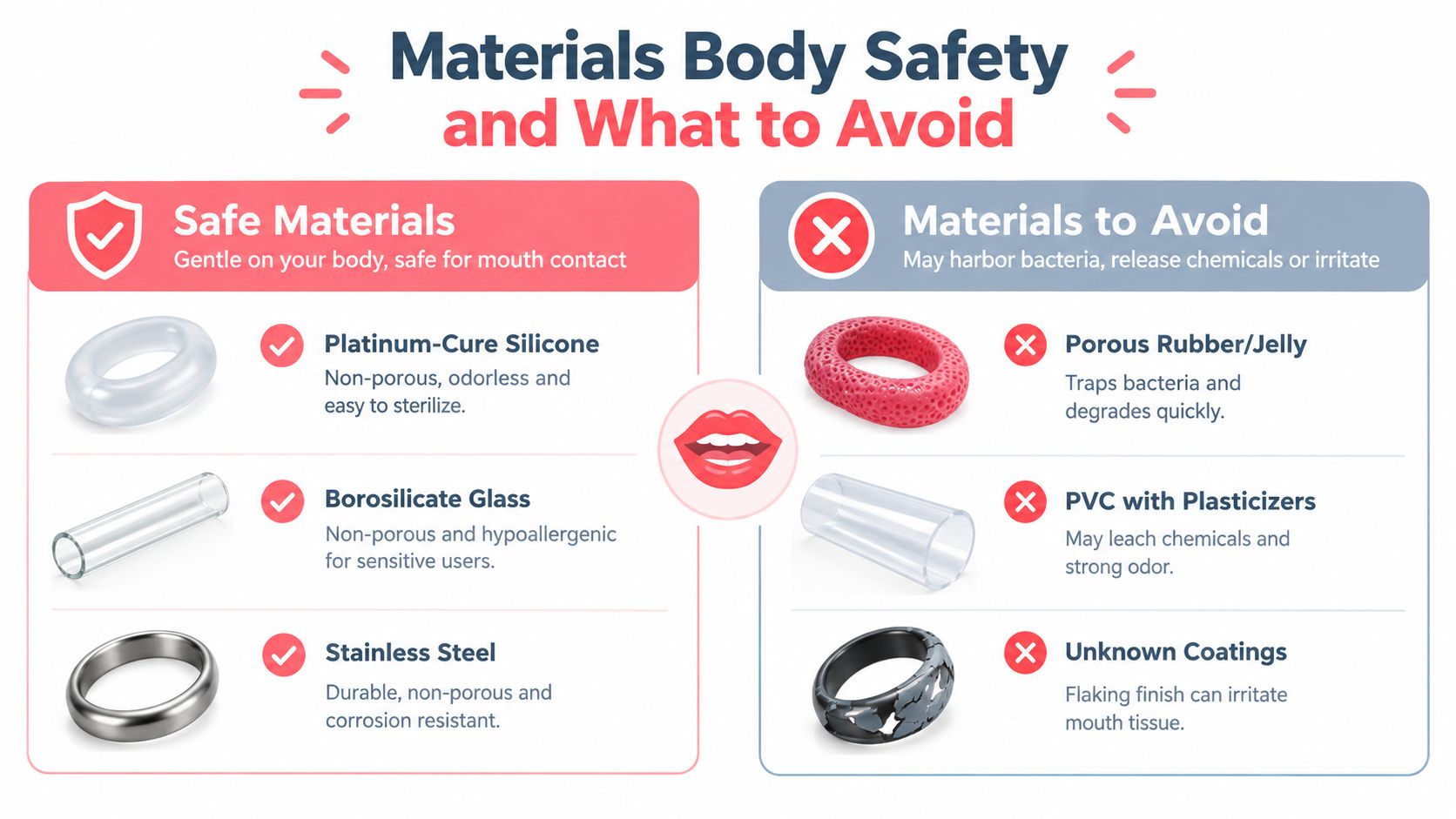
Repeated mouth contact makes material verification especially important. Platinum-cure silicone is non-porous, washable and suitable for regular use when the product is correctly manufactured and maintained. UK buyer guidance describes silicone as a safer baseline for regular use, while porous TPE is harder to disinfect and may degrade within 12 to 24 months; the same guidance says silicone can be expected to last five to ten times longer (UK guidance on body-safe sex toys).
Porous materials contain microscopic spaces that can retain moisture, odour and residue. Washing the surface may not remove everything held within the material. That doesn't mean every porous product causes an immediate problem, but it does make hygiene more difficult, particularly when a gag is used by more than one person or stored before it has dried completely.
What a trustworthy listing should say
Look for a specific material rather than a broad marketing phrase. UK safety guidance identifies platinum-cure silicone, borosilicate glass, ABS and 304 or 316 stainless steel as defensible specifications for body-contact products, while vague descriptions such as “silicone blend” or “rubber” deserve caution (UK material safety guidance).
For a mouth-contact gag, silicone will usually be the most practical choice because it's flexible and washable. Glass and stainless steel are non-porous, but their rigidity and weight make them less forgiving if the design or fit is unsuitable. ABS may appear in rigid components, though the listing should explain which parts contact the mouth.
Avoid products with a strong chemical smell, sticky surface, flaking coating or an unexplained finish. Don't assume “jelly”, “PVC” or “rubber” means the same thing as a named, non-porous material. If the seller can't identify the mouth-contact material, choose a listing with clearer information.
For a deeper explanation of intimate-product materials, see this guide to choosing safer intimate products. The same principle applies here: a clear specification is more useful than a reassuring adjective.
Safe Use Consent and Communication Essentials
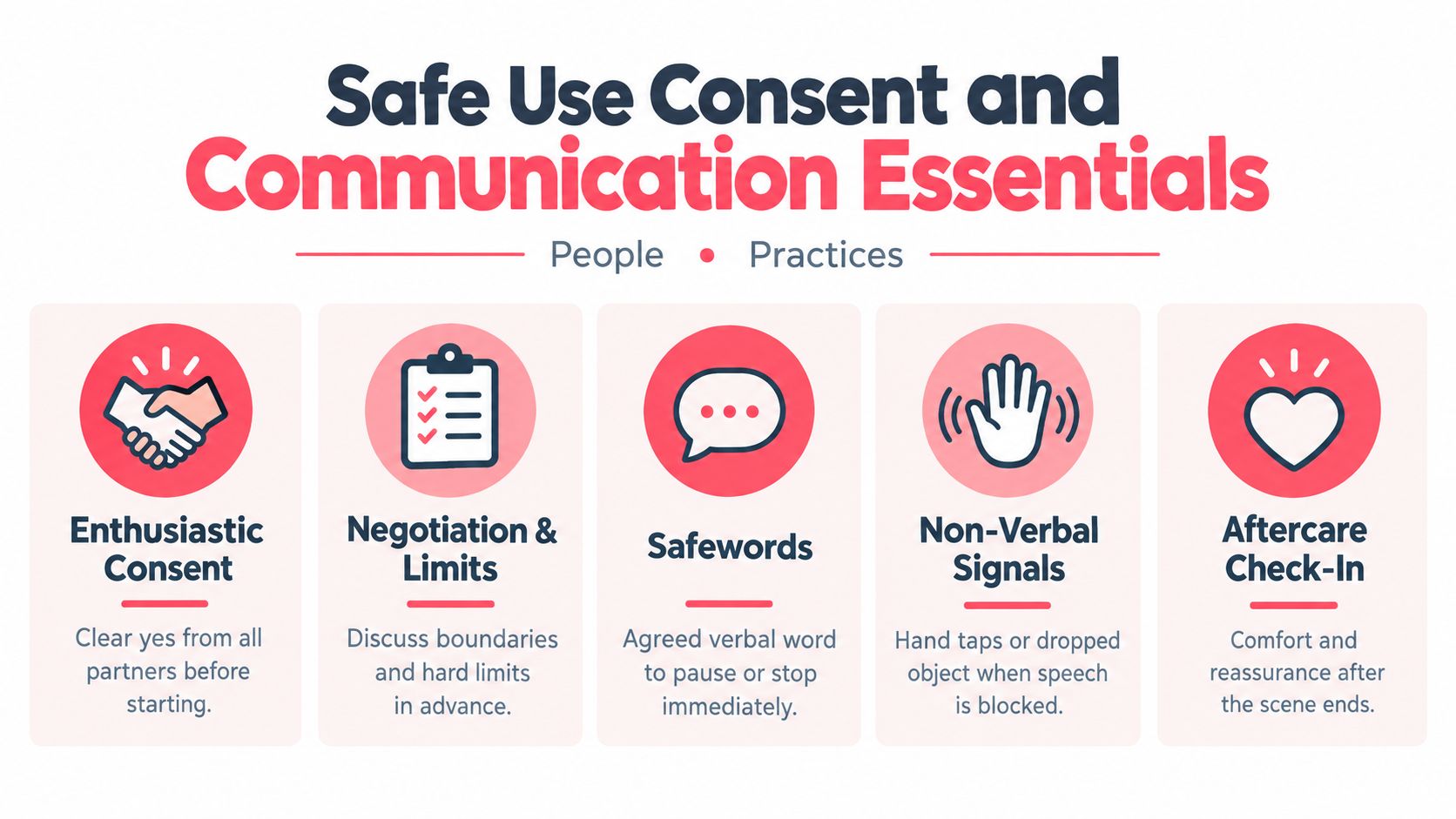
A gag scene works best when the wearer can stop it quickly without relying on speech. Discuss the plan while everyone is comfortable and fully attentive. Consent should cover the gag itself, the intended intensity, touching, positioning, duration and any other activity that might happen during the scene.
Choose a verbal safeword for moments when the gag is not in place, then add a non-verbal signal for use while the wearer is gagged. A hand tap, repeated foot movement, dropped object or clear hand gesture can work. The signal must be visible from the positions you plan to use, and the partner should practise recognising it before starting.
A repeatable pre-scene routine
- Check consent and limits. Confirm that everyone still wants to proceed. Discuss hard limits, positions, touching and what would end the scene immediately.
- Choose the release method. Keep the key, buckle, scissors or other release tool within reach. Don't rely on a complicated knot or a phone that might be out of reach.
- Test communication. Fit the gag briefly while the wearer is seated. Ask them to demonstrate the stop signal and make sure the supervising partner can see it.
- Check breathing and jaw comfort. Watch the wearer's breathing pattern, colour and body language. Pause if they show distress, struggle to breathe, experience jaw pain or become unusually quiet.
- Stay present and sober. The supervising partner should remain attentive rather than distracted by a screen, alcohol or another activity.
- Remove the gag before fatigue becomes a problem. Drooling, jaw tiredness and anxiety can build gradually. A scene doesn't need to reach a planned endpoint if the wearer wants a break.
Safety principle: If you're unsure whether a signal was intentional, treat it as a stop signal and remove the gag.
Aftercare can be simple. Offer water, a towel, reassurance and a calm check-in about what felt good or uncomfortable. A later conversation can improve future sessions, including strap position, ball size, breathing comfort and whether the communication signal was easy to use.
For wider ideas about negotiating restraints and bedroom positioning, read this practical bondage guide.
How to Choose the Right Gag for Fit and Comfort
Choose by function before style. A first purchase should usually prioritise an adjustable harness, a manageable mouth shape, smooth edges and clear cleaning instructions. If the wearer has dental work, jaw problems, a sensitive gag reflex or breathing concerns, speak with a relevant healthcare professional before experimenting.
Sizing needs more attention than a simple small, medium or large label. Check the stated insert diameter or panel width, strap length, buckle position and whether the product can be adjusted while worn. A gag that pulls backward can strain the jaw, while one that sits too tightly against the cheeks may create pressure or rubbing.
Comparison table
| Gag Type | Speech Restriction | Breathing Ease | Cleaning Ease | Best For |
|---|---|---|---|---|
| Ball gag | Strong muffling | Depends on size and fit | Usually straightforward with non-porous material | Wearers who want a classic enclosed design |
| Bit gag | Changes jaw position and muffles speech | Usually open around the sides, but fit still matters | Simple if the bar and straps are accessible | Controlled jaw positioning |
| Ring gag | Speech remains highly limited | Open centre may feel less enclosed | Moderate, with attention to the ring and straps | Mouth access and open-mouth aesthetics |
| Breathable gag | Moderate to strong restriction | Openings may support airflow | Moderate, because holes need careful rinsing | People who prefer a less sealed design |
| Panel gag | External muffling | Airflow depends on edge fit and coverage | Often easy if the panel is smooth | External coverage without a large insert |
| Harness style | Depends on the attached mouthpiece | Depends on the mouthpiece and strap tension | More straps and hardware require inspection | A stable, secure fit |
Try the fit at home without beginning a scene. Check that the wearer can breathe comfortably, swallow normally enough for their body and signal for removal. Look for pressure behind the ears, across the cheeks, on the lips and around the teeth.
Buckles can offer precise adjustment, while hook-and-loop fasteners may be quicker to release but can catch hair or lose grip over time. Padding can improve comfort, but it shouldn't hide a poor fit. If the product shifts, pinches or causes jaw pain during a short trial, it's not the right choice for longer use.
Cleaning Storage and Ongoing Care
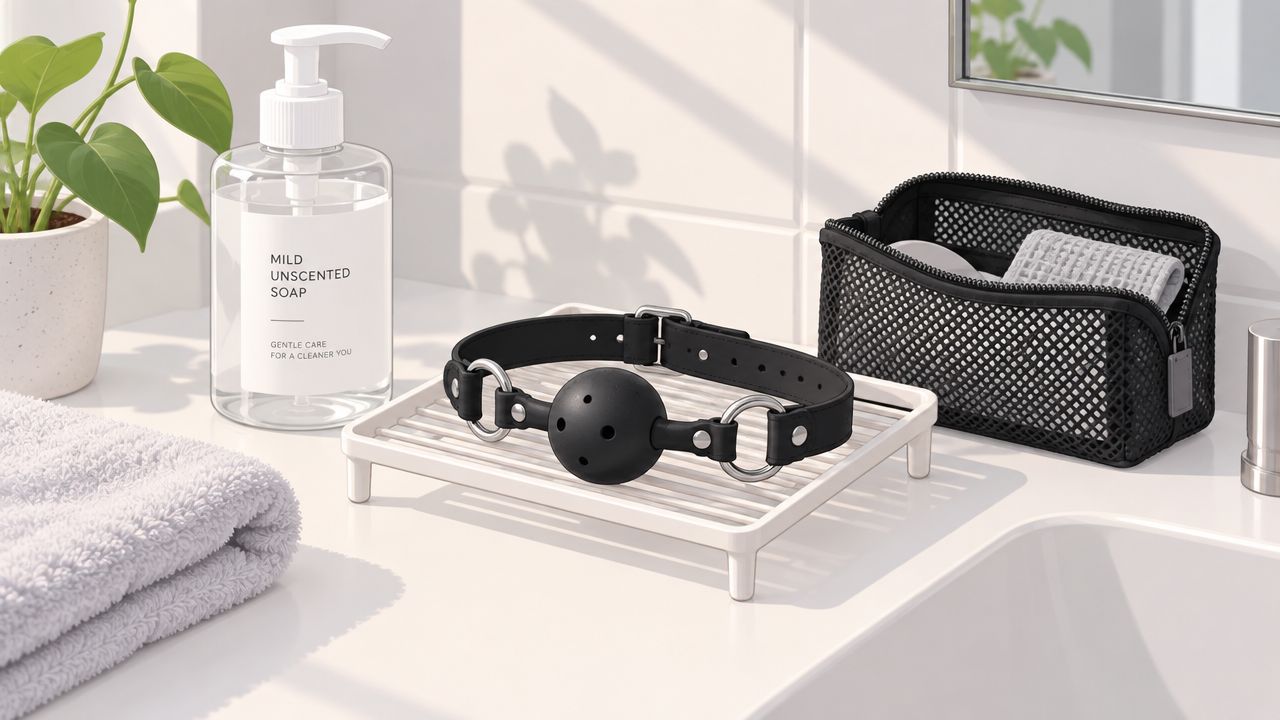
Clean a gag before its first use, after every use and whenever it has been handled by someone else. Start by separating removable straps or attachments if the manufacturer permits it. Wash a compatible silicone mouthpiece with warm water and mild, unscented soap, then rinse thoroughly so no cleanser remains.
For a more detailed routine, follow this guide to cleaning silicone toys. Don't soak components that contain batteries, charging ports, untreated metal or glued sections unless the manufacturer specifically says they're waterproof.
A simple care workflow
- Before use: Inspect the mouthpiece, coating, stitching, buckles and any ventilation holes. Don't use it if a surface has become sticky, cracked or flaky.
- After use: Rinse away saliva and residue promptly. Wash the non-porous component according to its care instructions, then rinse again.
- Dry completely: Pat with a clean, lint-free towel and allow the item to air-dry fully. Moisture trapped under straps or around hardware can encourage odour and deterioration.
- Store separately: Keep the gag in a clean fabric pouch or breathable mesh bag, away from dust, direct sunlight, heat and other toys that could mark silicone.
- Review the hardware: Check for stretched elastic, loose stitching, sharp buckle edges and weakened fasteners. Replace the product when damage could affect comfort, hygiene or quick removal.
Porous materials need extra caution because cleaning may not reach residue retained below the surface. If a product's finish changes, develops a persistent smell or can't be cleaned confidently, replacing it is more sensible than trying to restore it.
Discreet storage also protects privacy in a shared UK home. A labelled pouch inside a private drawer keeps the item clean and reduces the chance that someone handles it without consent.
UK Buying Tips and Your Next Confident Step
A careful UK purchase starts with the listing, not the checkout button. Confirm that the seller names the mouth-contact material, gives usable measurements and explains how the gag fastens and releases. Look for product photographs that show the interior, seams, holes and hardware rather than only close-ups designed to highlight appearance.
A UK purchase checklist
- Age access: Buy only from a retailer serving adults aged 18 and over, with an age-verification process where required.
- Privacy: Check whether packaging is plain, whether the billing descriptor is discreet and whether delivery notifications reveal product information.
- Checkout security: Look for a secure checkout and a clear privacy policy. A UK retailer should explain how it handles personal data under its GDPR-compliant policies.
- Returns: Read the intimate-product returns rules before opening sealed packaging. Hygiene restrictions may affect whether an opened gag can be returned.
- Delivery: Confirm the delivery method, tracking process and what happens if nobody is available to receive the parcel.
- Reviews: Use reviews to identify recurring comments about strap adjustment, smell, sizing, cleaning and comfort. Don't treat a high rating as proof of material safety.
The wider UK market shows why clear education matters. The LELO UK Sex Census 2023 reported that 49.3% of women and 38.5% of men had used a sex toy in the previous 12 months (LELO UK Sex Census 2023). The same report said 4.7% of Britons currently use or had used household goods for masturbation, which it translated as more than three million people nationwide. That familiarity with intimate products doesn't remove the need for safer materials, better guidance and thoughtful communication.
One further UK trust gap concerns hidden components. 71% of respondents in an Office for Product Safety and Standards survey said they'd be concerned about a toy containing a button or coin battery, while 86% of adults in a separate consumer survey believed products sold in the UK are safe because of regulation (OPSS product safety and consumers report). Check battery compartments and construction rather than assuming a regulated marketplace guarantees every product detail.
Immerse Creations provides a UK online catalogue with clear product specifications, discreet delivery and customer resources covering cleaning, returns and order tracking. If you're ready to compare options, start with a simple, adjustable design, verify the mouth-contact material and agree your stop signal before you place the order.
Choose a gag that makes breathing, communication and cleaning straightforward, not one selected only for its appearance. Visit Immerse Creations to browse discreet UK intimate products and review the available specifications, care guidance and delivery information before making your choice.