Nipple Clamps Chains: A Safe Usage Guide
The popular advice is that nipple clamps with chains are more aesthetic, more dramatic versions of standard clamps. That's incomplete, and it can lead buyers into a setup that feels much stronger than expected. The chain doesn't just decorate the clamps. It adds pull, movement, mechanical advantage and extra contact points, so your choice of clamp, material and play environment matters far more than a product photo suggests.
In the UK, these accessories are sold as a niche BDSM and bondage category rather than a mainstream standalone product. Retail listings include clamps that attach to bondage rope or chains, as well as chain-based nipple and clitoral designs, so the format is commercially established even though practical guidance remains patchy. UK retail listings show the range of chain, ring and weight combinations.
Table of Contents
- The Hidden Physics of Chained Nipple Clamps
- Comparing Clamp Mechanisms and Chain Dynamics
- Material Safety and Multi-Point Skin Compatibility
- Strict Rules for Circulation and Safe Wear Times
- Hygiene Maintenance and Discreet UK Purchasing
- Integrating Chained Clamps into Collaborative Play
The Hidden Physics of Chained Nipple Clamps
A standard clamp mainly creates pressure at the clamp tips. Add a chain, and the nipple also experiences a continuing downward force. The chain may be light, but it still hangs, shifts and tugs whenever the wearer moves. That changes the load on the clamp points instead of merely changing the appearance of the accessory.
The effect becomes more noticeable when the chain catches, swings or connects to another point. A small movement can turn a steady pinch into a pulling sensation, while a snag can create abrupt, uneven removal. The Oxford Centre for Evidence-Based Medicine discussion of nipple shields and related pressure risks supports a conservative approach to pressure and circulation, particularly where an accessory adds force beyond the contact point itself.
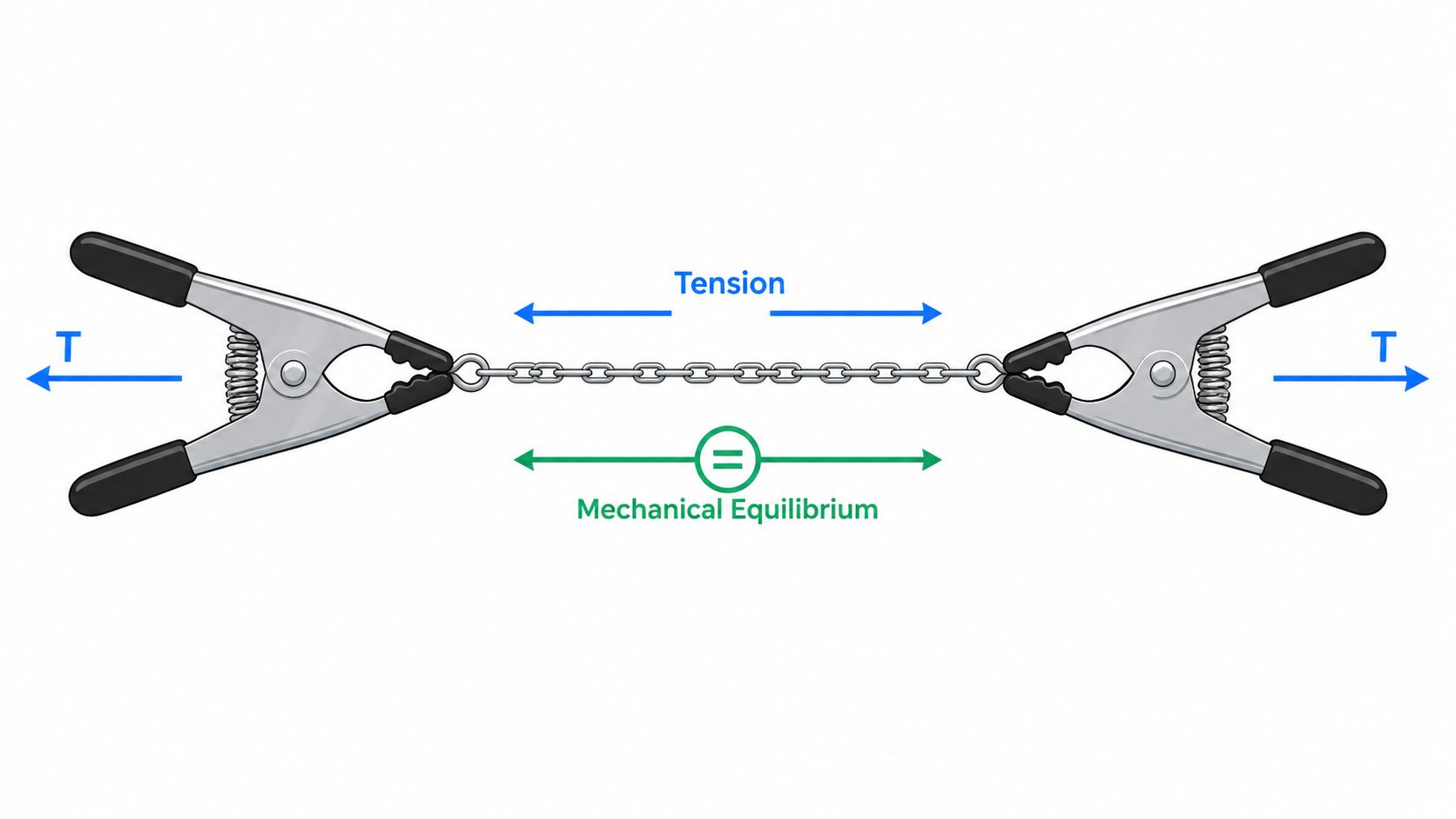
Why leverage matters
The clamp doesn't know whether the chain is decorative or being pulled. Its tips still press into delicate tissue, and the chain's weight keeps drawing the clamp down. If the clamp is already tight, that extra force can reduce your practical safety margin by increasing local pressure and restricting circulation more quickly than the clamp alone.
That's why I don't recommend starting with a heavy chain or a fixed, aggressive design. An adjustable clamp with soft tips gives you a chance to learn how your body responds before adding movement. If the set includes removable weights, leave them off at first. Treat the chain as a source of additional tension, not as a convenient grip or leash.
Practical rule: If you wouldn't trust the chain to support your body weight, don't use it to pull the clamps.
Your surroundings matter too. Bedding, furniture, clothing and restraints can catch a dangling chain. A sudden snag can pull one side harder than the other and produce a sharp pressure spike as the clamp detaches. Keep the chain clear, stay able to reach the release mechanism, and never use chained nipple clamps in a situation where you can't remove them immediately.
For readers exploring how accessories behave around vibration and movement, this guide to vibration-dampening materials offers useful context. The same principle applies here: control unwanted movement before increasing stimulation.
Comparing Clamp Mechanisms and Chain Dynamics
The clamp mechanism determines how much control you have once the chain starts moving. A product that feels manageable while still may become unstable when you walk, change position or connect the chain to another accessory. UK listings include adjustable, removable-weight and vibrating variants, which shows that this is an evolving category rather than one standard construction. A UK adjustable weighted listing also illustrates how removable components can change the setup without requiring a completely different pair of clamps.
| Clamp Type | Mechanism | Chain Interaction & Safety Note |
|---|---|---|
| Adjustable tension | A sliding ring, screw or similar adjustment changes the pinch | Useful for gradual testing, but movement can loosen or tighten the setting. Recheck rather than assuming the original tension will remain stable. |
| Alligator | A hinged jaw closes around the nipple, often with a screw adjustment | The chain adds downward pull to the jaw. Soft tips can improve comfort, but a tight screw setting can make removal more difficult. |
| Screw | A threaded control increases or reduces pressure directly | Precise adjustment can help, but tightening while distracted by chain movement makes over-compression easier. |
| Clover | Interlocking jaws increase pressure when pulled | A chain can make movement more intense and less predictable. This is a poor starting point for anyone still learning their circulation and pain responses. |
Adjustable designs
Adjustable clamps are the most sensible entry point, but “adjustable” doesn't mean automatically safe. A sliding ring can move as the chain swings, and a screw can be tightened incrementally without the wearer noticing how much pressure has accumulated. Put the clamps on without the chain pulling first, then add the chain only after the base sensation is clearly understood.
Removable weights deserve the same caution. A UK listing identifies adjustable clamps with removable weights, giving buyers a way to alter the load. That flexibility is useful, but it can also tempt you to add weight before you've tested the clamp on its own.
Alligator and screw styles
Alligator clamps are familiar because their hinged jaws are easy to see and operate. Their main advantage is control, especially when the tips are cushioned and the adjustment screw is accessible. Their weakness is that chain movement can disguise how much pressure the screw is applying, so the wearer needs a clear removal plan.
Screw clamps suit people who want fine adjustment, not people who want to tighten by instinct during a scene. Keep the tool or release method within reach, and don't let a partner adjust the screw without asking for a direct check-in first.
Clover styles and active play
Clover clamps are a different proposition. Their grip can intensify when the attached chain is pulled, so a movement that looks playful can quickly become a much sharper stimulus. I'd reserve them for experienced users who already understand their response to nipple compression and who can communicate instantly.
The same control principle applies to other body accessories. For example, a Sex Machine with 5 Dildo Attachments provides adjustable rotation, speeds and interchangeable attachments, but it shouldn't be combined with chained clamps unless everyone can still monitor pressure, movement and access to the release mechanism.
Material Safety and Multi-Point Skin Compatibility
A chained set isn't one material. It's a small system made from clamp tips, clamp bodies, chain links, rings, clasps and sometimes removable weights. Every part that touches skin needs checking, especially if you're prone to irritation or react to metals.
Retail descriptions often mention stainless steel, nickel-free finishes, PVC-coated tips or body-safe metal, but those labels don't always describe every connector. A chain may use a different alloy from the clamp, and an attachment ring may have a coating that wears with cleaning or friction. Read the full specification and ask the retailer about any unlisted contact point before buying.
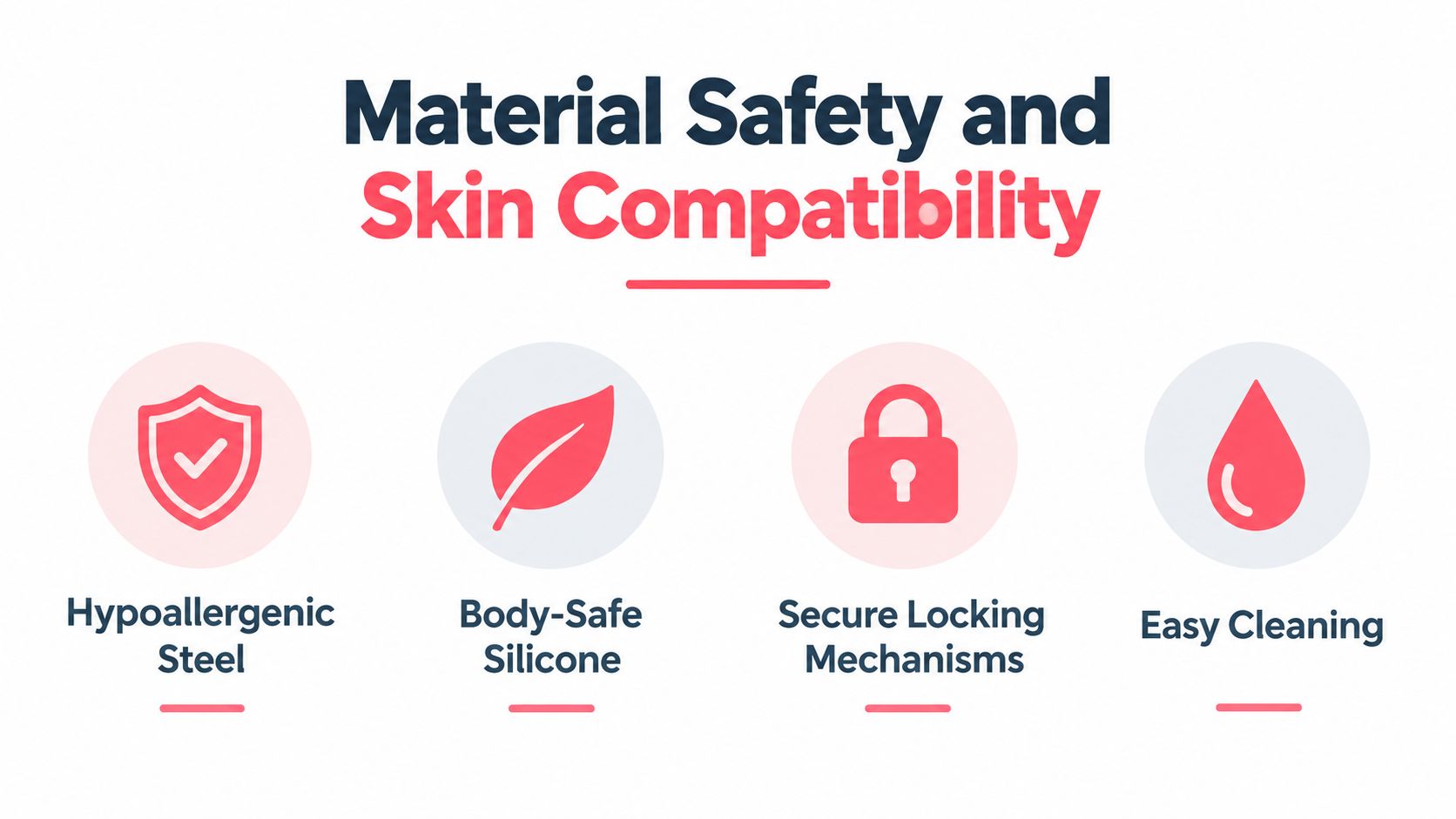
What to verify before purchase
For the clamp tips, look for a clearly identified body-safe covering such as silicone or PVC, with no cracks, peeling or sharp edges. Bare metal can be appropriate for some users, but it demands a higher level of confidence in the metal composition and your own skin tolerance.
For the chain and connectors, ask whether the material is nickel-free and whether the retailer provides meaningful compliance information. A claim about one component doesn't automatically cover the whole assembly. The Entice product listing reflects the broader issue, with product pages increasingly presenting details such as finishes and chain construction while leaving buyers to judge practical skin compatibility themselves.
A good buying question: “Which parts touch skin, and what is each one made from?”
Corrosion is a safety problem
Rust, flaking plating and pitting aren't cosmetic annoyances. They can create rough edges, hold residue and increase the chance of irritated skin. Don't use a chained clamp if the metal is damaged, the coating is lifting or the links no longer move smoothly.
Avoid using any clamp on broken, inflamed or already irritated skin. If you have a known metal allergy, don't rely on a vague “hypoallergenic” phrase. Get the exact alloy or choose a design with fully covered contact surfaces, then patch-test any non-intimate skin-contact material where appropriate.
For a broader explanation of choosing safe intimate product materials, focus on the same rule: identify every material, not just the most attractive feature in the product title.
Strict Rules for Circulation and Safe Wear Times
Chained nipple clamps deserve shorter, more cautious sessions than a comparable clamp without a chain. The added downward force increases pressure at the clamp points, while movement can make the load unpredictable. Don't treat a retailer's maximum wear guidance as a target, especially if the chain is heavy, fixed or connected to another restraint.
Some UK product instructions explicitly say not to leave clamps on for more than 30 minutes, while others tell users to stop if numbness, discolouration or extreme pain appears. A UK retailer's chained-clamp guidance is a useful reminder that time limits and symptom checks belong in the buying decision, not as an afterthought.
Use a conservative sequence
Start without extra weights, attachments or pulling. Apply the clamps gently, check the fit, and watch how the nipple looks and feels before allowing the chain to hang freely. If the chain adds discomfort immediately, remove it rather than tightening the clamps to stop them slipping.
During wear, check for:
- Blanching: Skin becoming unusually pale can indicate restricted blood flow.
- Coldness: A noticeably cooler nipple is a reason to remove the clamp.
- Numbness: Loss of sensation means the session ends immediately.
- Discolouration: Blue, grey or unusually dark colouring isn't a challenge to push through.
- Sharp or escalating pain: Remove the clamp instead of negotiating with the sensation.
Remove at once if any warning sign appears. Don't wait for a planned pause, and don't ask the wearer to tolerate numbness because the scene is nearly finished.
Control the environment
Keep the chain away from bed frames, drawer handles, clothing, furniture and other restraints. A snag can produce uneven removal and a sudden increase in pressure. The chain is never a handle, and it shouldn't be attached to anything that can pull with force.
Have the clamps' release controls accessible throughout the scene. If a partner wears them, the partner should be able to say the agreed stop word, remove the clamps themselves where possible and receive a response without delay. A non-verbal signal is essential if speech may be restricted.
Remove first, discuss later. Pain can be negotiated. Numbness, coldness and visible circulation changes need action.
After removal, observe the area rather than immediately reapplying the clamps. Persistent pain, loss of sensation, marked swelling or ongoing colour change deserves medical advice. Don't use the accessory again until the skin has fully recovered.
Hygiene Maintenance and Discreet UK Purchasing
Chains make cleaning more tedious because residue can sit inside links, around connector rings and beneath protective tips. Wipe the entire assembly rather than cleaning only the clamp faces. Use a cleaner suitable for the materials listed by the manufacturer, then rinse or wipe away residue as directed and dry every joint thoroughly.
You shouldn't assume a chained metal accessory can be boiled. Coatings, adhesives, PVC tips and mixed-metal connectors may not tolerate high heat, and harsh chemicals can damage finishes. A soft cloth, careful attention to the links and complete drying usually provide better long-term care than aggressive treatment.
A practical cleaning routine
Clean before first use and after every session. Separate removable pieces if the design allows it, but don't force a connector that looks permanently assembled.
- Inspect: Look for rust, rough edges, peeling coatings and trapped residue.
- Clean: Reach the chain links and fasteners with a soft cloth or small, clean brush.
- Rinse carefully: Remove any cleaning product that could irritate sensitive skin.
- Dry completely: Moisture left in links can encourage corrosion.
- Store separately: Keep the chain from scratching coated surfaces or silicone components.
The guide to cleaning silicone toys is helpful for understanding why material-specific care matters. Chained clamps may combine silicone or PVC with metal, so follow the least aggressive method compatible with the complete set.
What UK buyers should demand
A good UK retailer should publish the clamp material, tip material, chain composition, adjustment method and cleaning instructions. If the product page only promises “intensity” or “sensation” without describing weight, connectors or skin-contact surfaces, treat that as missing information, not a minor copywriting flaw.
Discretion also deserves a practical check. Look for plain external packaging, a neutral billing descriptor and a returns policy that explains how intimate products are handled. Immerse Creations presents a UK-focused online catalogue with discreet delivery, secure checkout and product information intended to support private comparison. Those are useful purchasing features, but you should still inspect the specific product page for its material and care details.
Don't buy a damaged, rusty or poorly specified set just because the design looks appealing. A lower price cannot compensate for uncertain materials or a chain that you can't clean properly.
Integrating Chained Clamps into Collaborative Play
The safest scene starts before the clamps leave the packaging. Agree whether the chain is decorative, tactile or allowed to create pull. Those are different activities, and “a little tugging” isn't precise enough when one person's movement can increase pressure on another person's nipples.
Talk through the clamp type, the material concerns, the intended duration and the exact stop signals. Use a safeword plus a non-verbal signal, such as repeated hand taps, particularly if a gag, music or movement could make speech unreliable. The person wearing the clamps gets the final say, and removing them doesn't require a debate.
A controlled scene example
A couple might begin with adjustable clamps and no added weight. The wearer checks the fit while standing still, then moves slowly while the other partner watches the chain and asks about pressure. If the chain pulls more strongly during movement, the partner stops the motion and removes the clamps rather than treating the change as a test of endurance.
If both people want more interaction, the chain can remain a visual guide without being pulled. It can rest against the chest, connect to a purpose-designed accessory or move gently with the body, provided it never becomes a load-bearing handle. Keep other stimulation independent enough that the wearer can focus on circulation and comfort.
A wand vibrator or position-enhancing furniture can add sensation without transferring force through the chain. The important detail is separation of controls. One partner should be able to stop the vibrator, halt movement and remove the clamps without reaching across an unstable setup.
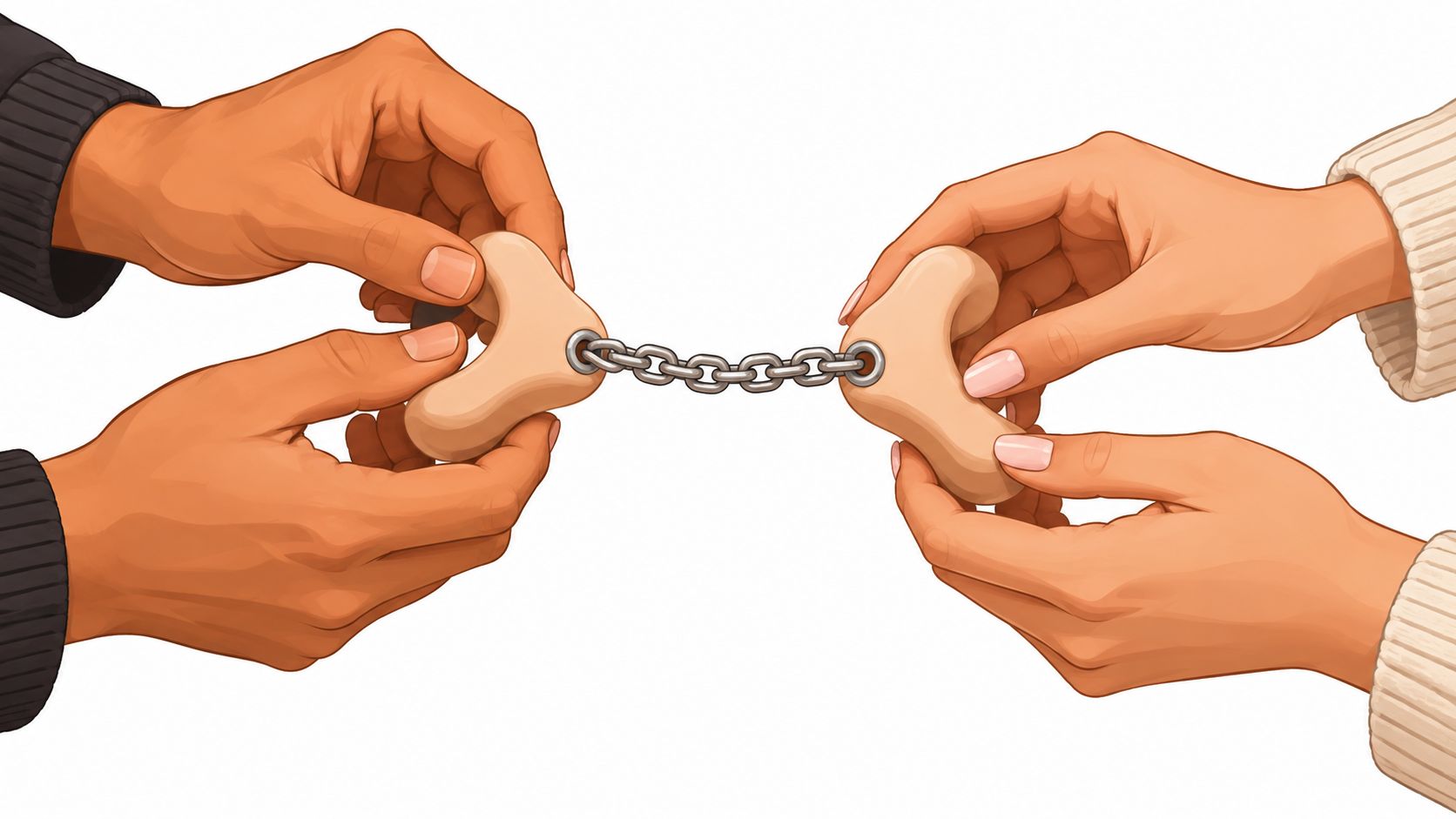
Aftercare belongs in the plan
Once the clamps come off, check the skin together and ask about lingering sensations. Clean and dry the accessory before storing it, then note what worked, what felt too strong and whether the chain moved in an unexpected way.
My recommendation is straightforward. Choose adjustability, verify every material, keep the chain free from snags and stop at the first sign of circulation trouble. Chains can look spectacular, but the best scene is the one where intensity stays under deliberate control.
If you're comparing nipple clamps chains with other body-safe accessories, browse the clearly specified intimate products at Immerse Creations. Choose equipment that fits your play style, check the material details before ordering and use the retailer's discreet UK delivery and support resources to plan confidently.