Male Anal Dildoing: How to Do It Safely
You've got a toy ready, but you're still wondering how to tell ordinary pressure from a warning sign. Perhaps a previous attempt happened after a few drinks, felt rushed, and left you sore rather than comfortable. That's a reason to change the approach, not to push harder next time.
Male anal dildoing should be measured by comfort and control, not depth or speed. A worthwhile session can involve very little insertion, or none at all. Finishing without pain, bleeding or a sense that you forced anything matters more than reaching a particular point on the toy.
Table of Contents
- What to Check Before You Start
- How to Prep the Toy and Your Body
- Choosing a Lubricant and Using Enough
- Positions That Suit Beginners
- How to Relax and Insert Slowly
- Stop Signs and When to Get Help
- Aftercare and When to Book a Check-Up
What to Check Before You Start
Choose a relaxed evening when you're sober, unhurried and able to notice what your body's telling you. Don't start when you're distracted, exhausted or trying to fit it in before something else. If you're with a partner, agree that stopping needs no explanation.
Check how you feel before opening the lubricant. Existing anal pain, rectal bleeding, symptoms of infection or a recent anal procedure are reasons to pause and ask a GP or sexual-health clinic whether penetration is appropriate.
Check the toy, not just the label
A product being called a dildo doesn't automatically make it suitable for anal use. Look for:
- A broad flared base: It must remain outside your body and prevent the whole toy slipping inside.
- A manageable shape: Choose a slim, gradually tapered design rather than something that requires stretching to accommodate.
- An intact surface: Smooth, non-porous material should have no cracks, tears, rough seams or loose parts.
Our guide to choosing anal toys for men can help you compare designs without treating extra features as necessities.
Run a final self-check: are you comfortable now, is the toy intact, is the lubricant ready, and can you stop whenever you want? If any answer is no, leave it for another day.
Before-you-start rule: You don't owe yourself a session just because you've bought a toy or made plans.
How to Prep the Toy and Your Body
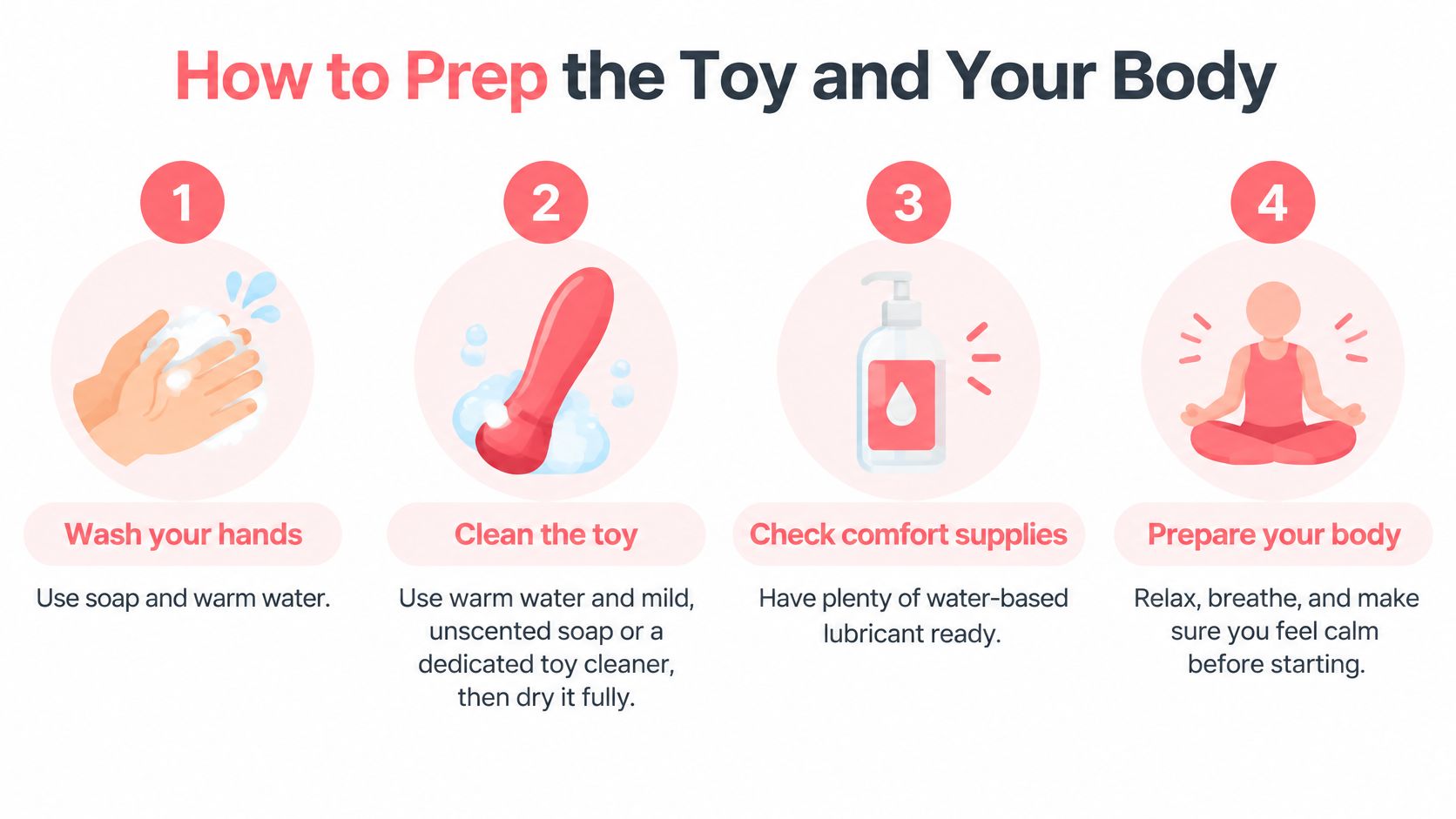
Preparation has two jobs: reducing contamination and making it easier to notice discomfort before you continue. Keep washing separate from handling the clean toy, so you don't undo one step with the next.
- Wash your hands with soap and warm water. Do this before touching the clean toy or your anal entrance. Check that your nails are short and smooth, as rough edges can scratch delicate tissue.
- Clean the toy before use. Use warm water and mild, unscented soap or a dedicated toy cleaner. Follow its material and electrical-care instructions, then rinse and dry it fully. Our guide to cleaning silicone toys explains material-specific washing and storage.
- Inspect it as you dry it. This is the useful moment to spot a split or loose component that lubricant might conceal. If you find damage, put the toy aside rather than covering it with a condom and continuing.
- Prepare a fresh condom for sharing or changing body sites. Wash the toy and your hands between users or body openings, and replace the condom. Carrying the same barrier from one activity to another also carries contamination.
- Use the toilet if you need to. Don't strain to empty your bowels. Treat this as an ordinary toilet visit, rather than a task you must complete before you're allowed to begin.
- Keep lubricant within easy reach. Have it ready before contact begins, so adding more doesn't require an awkward reach or an interruption you're tempted to skip.
- Allow gentle external contact before insertion. Notice whether you remain comfortable. If you're tense or contact hurts, pause rather than making insertion the goal. Stopping at this stage is a successful comfort check.
Cleaning and condoms do different jobs
A condom is a barrier, not a cleaning method. Cleaning removes contamination from the surface; a fresh condom separates that surface from the next person or body opening. A non-porous, body-safe toy still needs cleaning.
Check that the condom fits securely without overstretching. If it slips or bunches, pause and withdraw gently before replacing it. Continuing leaves you relying on a barrier that is no longer sitting properly.
A toy that has been stored since its last wash still needs cleaning before use. Looking clean doesn't replace the washing step.
Choosing a Lubricant and Using Enough
| Lubricant | Works with condoms | Works with toys | Drying and reapplying |
|---|---|---|---|
| Water-based | Yes, safe with condoms | Safe with most toy materials | Can dry or go sticky; reapply with more lube or a little water |
| Silicone-based | Check the condom packaging first | Can be unsuitable with some silicone toys | Lasts longer; check the toy material before use |
| Oil-based, such as petroleum jelly | No with latex, which it can weaken and cause to split | Check the toy's material instructions | Avoid for anal use with latex condoms |
Water-based lubricant is the simplest default when you're using condoms. Sexual Health Buckinghamshire's condom guidance supports using compatible lubricant and avoiding oil-based products that can damage latex.
The anus doesn't provide its own lubrication for penetration. You need enough lubricant to keep contact slippery rather than dragging, including on the toy, around the entrance and over the outside of any condom. A barely visible smear isn't a useful target.
Reapply before friction becomes pain
Water-based lubricant can lose moisture and turn tacky. Pause when you notice drag, then add more lubricant or a little water rather than continuing until it hurts. A thicker gel may be easier to keep where you've applied it, but thickness doesn't replace checking how contact feels.
Silicone-based lubricant generally lasts longer, which can be convenient if water-based products keep drying out. However, some silicone toys aren't compatible with it, so check both the toy instructions and condom packaging before combining them.
If your skin reacts easily, our guide to lubricant for sensitive skin can help you think through product selection. Stop using anything that causes burning or irritation rather than assuming that sensation is part of anal play.
Useful default: Choose water-based lubricant with condoms. Use silicone lubricant only when the toy and condom instructions both permit it.
Extra-thick condoms don't compensate for inadequate lubrication. Keeping friction low matters more than treating a thicker barrier as permission to continue when things feel dry.
Positions That Suit Beginners
| Position | Control | Ease of relaxing | Best for |
|---|---|---|---|
| On your back, knees up | Easy to set angle and pace | Good; hips and legs can relax when supported | First-timers |
| On your side, knees drawn up | Easy to stop and withdraw if you can reach comfortably | Very good; low strain on the body | Anyone who tenses when lying flat |
| On all fours | Good angle control, but stopping can be less convenient | Moderate; can strain wrists and back | Users wanting more angle variety |
| Seated or ride-on, toy on a stable base | Control of depth, but withdrawal can be harder | Moderate; thighs may tense | Users confident with the base and surface |
Start with the position that lets you reach the toy without twisting or holding your breath. Being able to stop matters more than finding an impressive-looking position. Keep your weight supported so you're not trying to balance and judge pressure at the same time.
Say a man finds that lying flat makes him arch his back and tense his abdomen. Turning onto his side, drawing his knees up comfortably and supporting his head may make it easier to settle. That's a practical adjustment, not a sign he needs to practise tolerating the original position.
Choose support over effort
On your back, a cushion beneath your knees may help you avoid holding your legs up through muscle effort. On your side, check that you can grip the base and withdraw without reaching awkwardly behind you. Neither position should require you to pull your knees tightly against your chest.
All fours can offer different angles, but sore wrists or a tiring lower back can make you brace. Seated positions require a secure base on a suitable surface, and body weight can introduce more pressure than you intended.
Use these checks before committing:
- Reach: Can you keep a reliable grip on the base?
- Support: Can your legs, shoulders and abdomen rest?
- Exit: Can you stop and withdraw without losing balance?
Pick a supported position and get familiar with it before experimenting. There's no required number of sessions to complete before changing, and no reason to stay with a position that feels awkward.
How to Relax and Insert Slowly
Comfort and the ability to stop are the measures of success. Let's Talk About It's sexual-health guidance explains that anal tissue is delicate and more susceptible to damage. That makes gentle pressure and attention to what you feel more useful than any target for depth or duration.
There's no guaranteed warm-up time or insertion depth that suits everyone. Use a purpose-designed anal toy with a broad flared base, keeping that base outside your body throughout.
Make each movement optional
Treat each pause as a checkpoint. Before moving again, check your breathing, the pressure you feel and whether you can comfortably stay still.
- Let your breathing settle. Breathe slowly and allow your abdomen and buttocks to soften as you breathe out. If you notice yourself bracing or holding your breath, pause. Give yourself time without setting a deadline for entry.
- Check the contact feels slippery. The lubricated toy and entrance should feel slippery rather than sticky. Keep a cloth nearby so lubricant on your hands doesn't make the base difficult to grip.
- Rest the tip against the entrance. Keep it still for a moment, with the flared base securely in your hand. Allow the muscles time to relax. Avoid straining or bearing down hard to make entry happen.
- Introduce the tip with very light pressure. Advance only while the pressure remains comfortable. Resistance is a reason to pause; if entry requires force, end the attempt. Increasing pressure to overcome resistance removes the control you need.
- Pause again after entry. You can stay still while you assess the sensation. There is no requirement to begin thrusting or insert more of the toy once the tip is inside.
- Keep movement short and controlled. Move only as far as remains comfortable, with pauses whenever you need them. Leave hard thrusting and powered movement out of a first attempt so you can judge each small change in pressure.
- Withdraw slowly while holding the base. Keep the direction steady and avoid sudden pulls. If removal hurts or meets unexpected resistance, stop pulling forcefully and seek help if it won't come out easily.
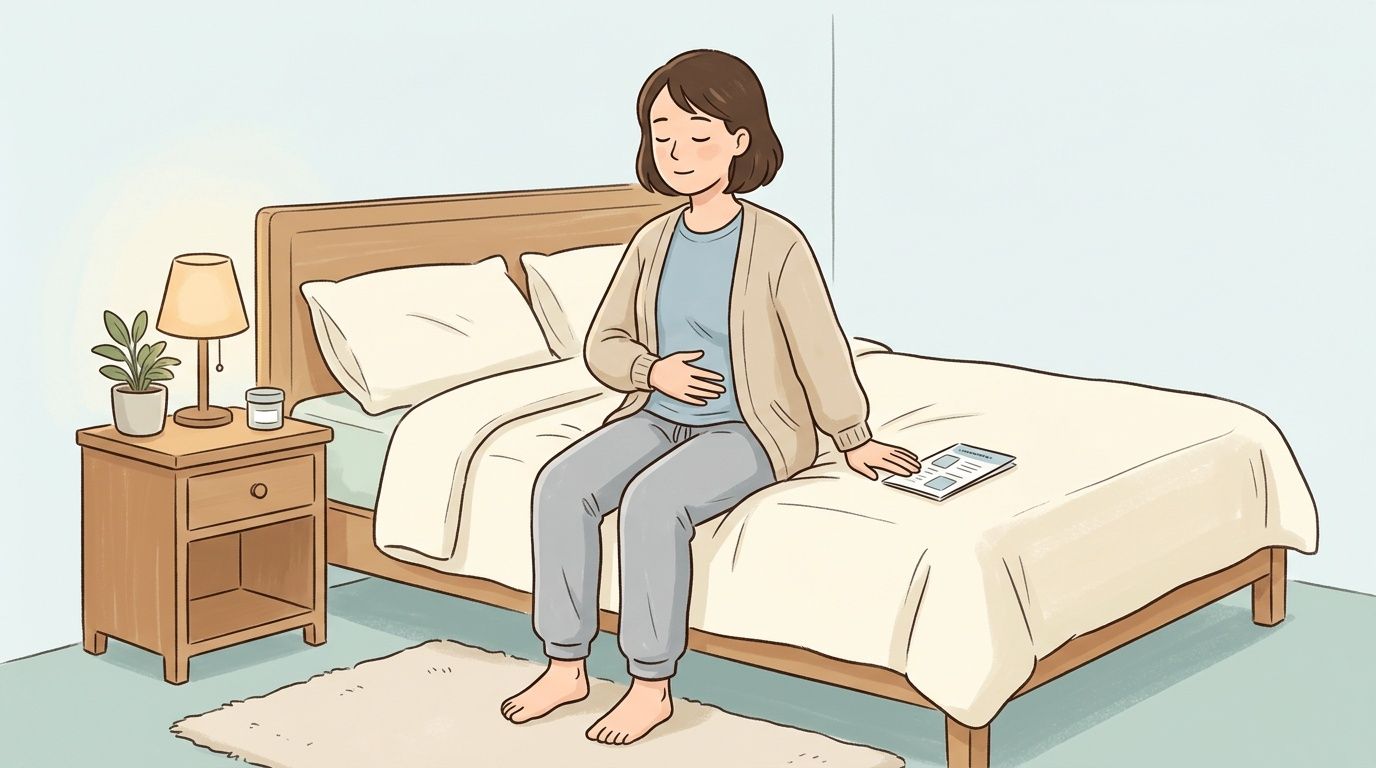
Let comfort set the depth
You may notice pressure or fullness, including towards the front wall. You can leave the toy at a comfortable shallow depth without identifying your prostate or producing a particular sensation. The available insertable length gives you options; it creates no obligation to use it all.
If you suddenly feel an urge to pass stool, pause and stop rather than pushing deeper.
The common mistake is bargaining with the first sharp twinge: a little further, then it might settle. Treat a sharp twinge as a signal to stop advancing immediately. Ending an attempt while you remain comfortable is a successful outcome.
Stop Signs and When to Get Help
A toy has slipped beyond reach, and you're tempted to retrieve it with something else. Leave it alone and go to A&E. Further attempts can add injury to a problem that already needs medical help.
Comfort is the measure of success. If something goes wrong, use the symptom to decide what help you need.
| Sign | What to do |
|---|---|
| Sharp or sudden pain | End the session. Withdraw only if the toy moves easily; severe or worsening pain needs urgent assessment. |
| Persistent bleeding | Seek medical advice. Heavy bleeding needs urgent assessment. |
| Dizziness or loss of control | Stop and rest. Get help if it doesn't pass; fainting needs urgent assessment. |
| Toy stuck or out of reach | Leave it in place, avoid force or retrieval tools, and go to A&E. |
| Suspected STI exposure or symptoms | Pause sex while arranging confidential advice and testing through a sexual-health clinic or GP. |
Recognise the different problems
The warning signs can overlap, but the underlying problems need different responses:
- Traumatic insertion: Force and friction can cause abrasions or tears. Numbing products hide warning sensations without preventing injury. Avoid further penetration to “check” whether the area has recovered.
- A retained toy: A toy that is stuck, beyond reach or difficult to withdraw needs medical removal. Digging with your fingers, inserting another object or repeatedly pulling can cause further damage.
- Possible infection: Shared or contaminated toys can transmit infections, even without visible injury. Tell the sexual-health clinic what contact occurred so it can advise on suitable tests, including whether a rectal sample is needed.
A UK surgical review published by the Royal College of Surgeons describes injuries associated with forceful rectal penetration and reports that the large majority of patients presenting with a rectal foreign body require extraction under general anaesthesia. These hospital presentations illustrate the severity of injuries requiring treatment; they cannot establish the typical risk during toy use.
Severe or worsening abdominal or rectal pain, heavy bleeding, fainting or feeling seriously unwell needs urgent medical assessment. Waiting for a routine sexual-health appointment could delay the care you need.
Tell medical staff what the object is, whether it is still inside and what symptoms you have noticed. These details help them treat you safely.
Aftercare and When to Book a Check-Up
Aftercare includes checking how you feel once the session is over. Tenderness, stinging or bleeding are useful details to record, especially if you later need advice from a GP or sexual-health clinic.
- Clean the toy after use. Follow the cleaning method described in the preparation section and the toy's care instructions. Keep non-waterproof electrical parts out of water.
- Dry it completely before storing it. Use a clean pouch or suitable container and keep it separate from other items to protect it from dust and surface damage.
- Wash your hands and check your comfort. Notice any irritation and avoid further penetration while symptoms remain. Record whether they settle, persist or return, rather than assuming recovery follows a fixed timetable.
Decide on symptoms, not embarrassment
A faint sting and a spot of blood on the toilet paper after a session can leave you unsure whether to book an appointment. Keep track of what happens afterwards. Recurring bleeding, pain when passing stool, discharge or symptoms that don't settle warrant a GP or sexual-health clinic appointment. Fever or feeling unwell needs prompt assessment.
You can seek advice even if you're unsure what caused the symptoms.
Book a sexual-health check if you've had anal sex with a new partner without a condom, even if you feel well. The clinic can advise on testing times and whether any immediate care is needed.
For any future attempt, keep a brief record of the position, what felt comfortable and any symptoms afterwards. Use that record to guide your choices, alongside a fresh inspection of the toy. There is no need to aim for greater depth or intensity.
Immerse Creations offers adult anal toys and prostate massagers with published material and product specifications. Use those details when browsing Immerse Creations to compare manageable shapes and suitable safety features, keeping comfort and control ahead of extra functions.